Many Central Coast properties have a power pole on the block that does not belong to Ausgrid. It carries the supply from the street to the house, and its condition is the owner's responsibility. Because it looks like every other pole, the ownership and the maintenance duty that comes with it often surprise people, usually when a defect notice arrives or the pole begins to lean.
This guide explains what a private pole is, how to recognise deterioration from a safe distance, and what replacement involves.
What a private pole is
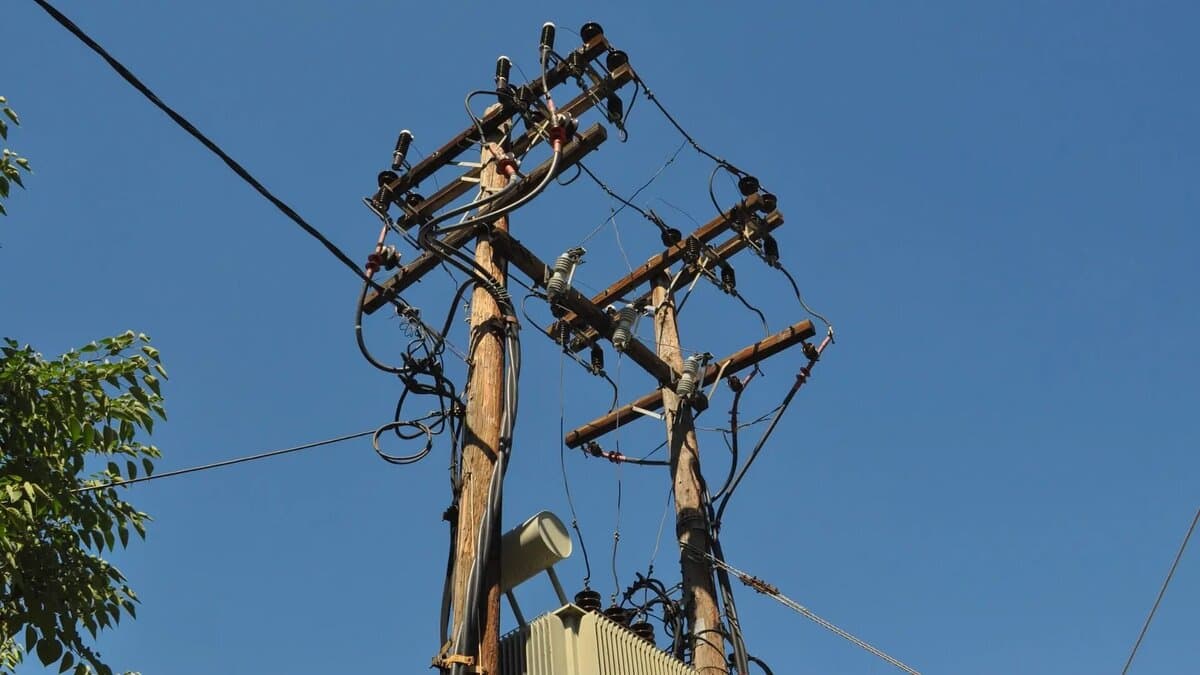
Ausgrid's network normally ends at the street pole or an underground pillar. Where the house is too far from that point for a single overhead span, or where the service needs to change direction, an intermediate pole is installed on the property. That pole, its crossarm, insulators and the conductor from it to the house are private assets. The owner is responsible for keeping them in safe condition, in the same way as the consumer mains and switchboard.
The distributor still owns the network up to the connection point and the metering provider owns the meter. The electrician establishes exactly where the boundary sits at your property; it is not always where the fence is. The Level 2 guide covers those boundaries.
Why rural and larger Central Coast blocks have them
Private poles are common on acreage and semi-rural blocks around the Central Coast, on long battle-axe lots, and on older suburban properties where the house sits well back from the street. Many were installed when the house was built and have not been looked at since. Timber poles in particular have a finite life, and coastal weather, wet ground and termites all shorten it.
Signs of deterioration
Look only from ground level and at a safe distance. Do not touch the pole, push against it, dig around the base or climb anything to get a closer look.
- Rot at the ground line. Timber poles decay where they enter the soil, often while the section above looks sound. Soft or spongy timber, fungal growth at the base, or a noticeable narrowing at ground level is a warning sign.
- Lean. A pole that has started to tilt, or where the service line looks tighter or lower than it used to, may be failing at the base.
- Termite damage. Mud tubes on the surface, a hollow appearance or fine sawdust around the base.
- Rust on steel poles. Corrosion at the base, at welds or where the pole meets its footing, particularly in salt air near the coast.
- Cracked or split crossarms, loose or tilted insulators, or a bracket pulling away.
- Vegetation contact with the conductor, or a line sagging close to a roof, shed or driveway.
- Weathering damage high on the pole, such as deep checking or splits that let water in.
If the pole has fallen, is leaning heavily, or the line is down or sparking, stay at least 8 metres away, keep people and animals clear, and call Ausgrid on 13 13 88 immediately. Call 000 if there is fire or someone is injured. A shock or tingle from a tap or metal fitting on the property is also an emergency: keep clear and report it to Ausgrid. Our guide to storm-damage electrical emergencies covers what to do after a storm.
Inspections and defect notices
Ausgrid expects private poles and lines to be kept in safe condition and inspected by a suitably qualified person, and its crews can issue a defect notice if they see a pole or line in poor condition while working in the area. The notice states what must be fixed and by when, and the timeframe must be met.
An inspection by a Level 2 electrician establishes the pole's condition, the state of the crossarm, insulators and service line, the connection at the house end, and whether the consumer mains and point of attachment need work at the same time. It also confirms ownership, which matters where a pole serves more than one property.
Timber versus steel replacement
A failed pole is normally replaced rather than repaired. The two usual options are:
- Treated timber. Familiar, straightforward to install and fitted with standard hardware. Still subject to rot and termites over time, so it needs ongoing inspection.
- Galvanised steel. Longer expected life and no termite risk, with good resistance to rot. Corrosion is still possible in coastal conditions, and the footing detail matters.
The choice depends on the site, the soil, the span and height required, exposure to salt air, and what Ausgrid's requirements allow for the location. The electrician sets out the options in the quote rather than assuming one material.
What a replacement involves
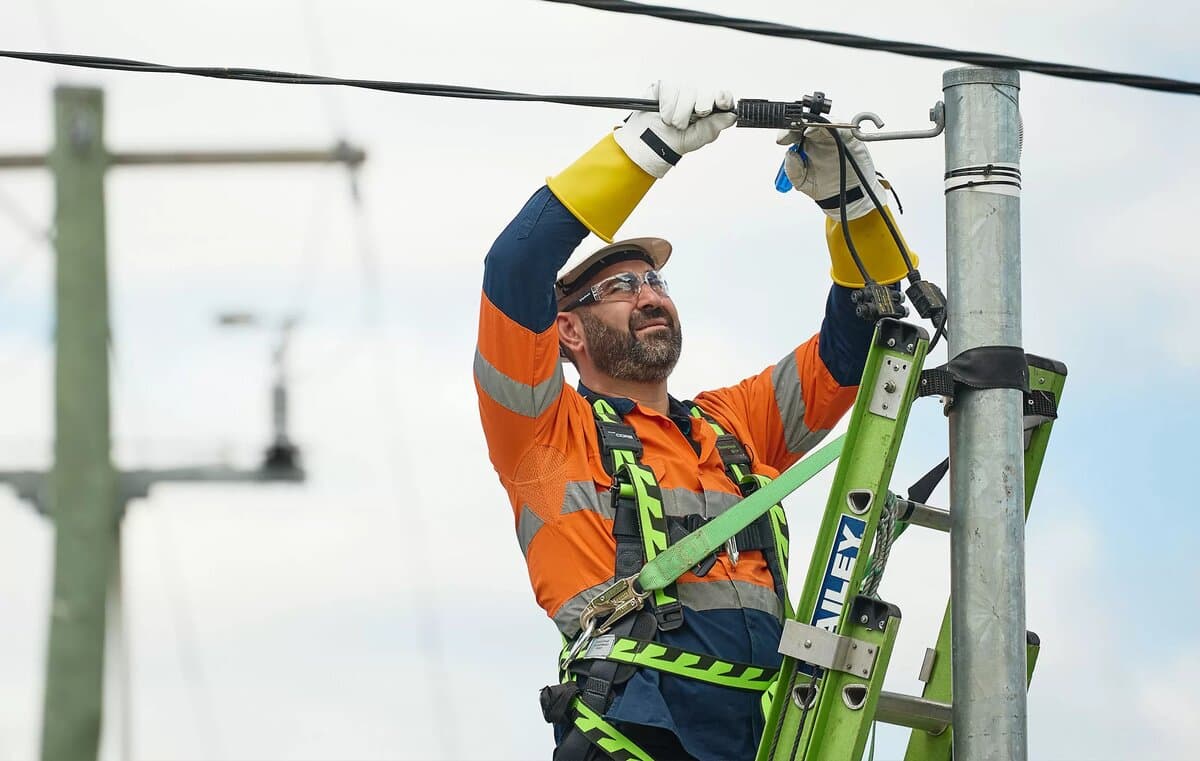
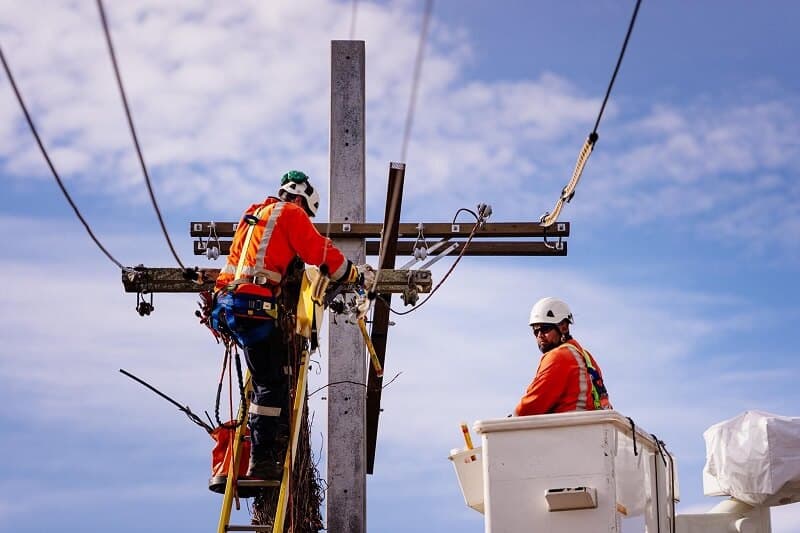
Replacing a private pole is Level 2 work, because it involves the service line and disconnecting the property from the network. The sequence is normally:
- Assessment and quote. Confirm ownership, condition, pole height and position, the service line and any related consumer mains work. Planned work is quoted in writing once the scope is understood.
- Distributor coordination. Lodge the required notification with Ausgrid, arrange the network isolation or connection method, and confirm any metering involvement.
- Access and excavation. Clear the area around the pole, locate underground services and excavate the new footing, usually close to the existing pole so the line route stays the same.
- Disconnection. Isolate the supply at the network connection under the relevant authorisation.
- New pole, crossarm and service line. Set and backfill the pole, fit the hardware and run a new service conductor from the network to the house.
- Reconnection and testing. Reconnect the supply, test the installation and remove the old pole.
- Documentation. Submit the completion notification to Ausgrid and provide the certificate of compliance for the electrical work.
Where the existing consumer mains or point of attachment are also deteriorated, it is usually sensible to replace them in the same visit rather than disconnect twice. The consumer-mains guide explains that scope.
Timing and power interruption
Planned replacement is scheduled once the quote is accepted and the Ausgrid notifications are in place. The power is off for the working period while the line is transferred, and you are told the expected outage window in advance so refrigeration, medical equipment and home offices can be planned for. Weather can move the date; setting a pole in saturated ground or during high wind is not done.
Emergency replacement after a pole failure is handled differently. Availability and arrival timing are confirmed on the call, and the immediate priority is making the site safe with Ausgrid before any reconnection.
What to have ready
- The property address and whether the pole serves only your house or a neighbour as well.
- Photos from ground level at a safe distance, showing the base, the top hardware and the line to the house.
- Any defect notice, with its number and date.
- The rough distance from the street pole to the house and whether access for a truck or auger is available.
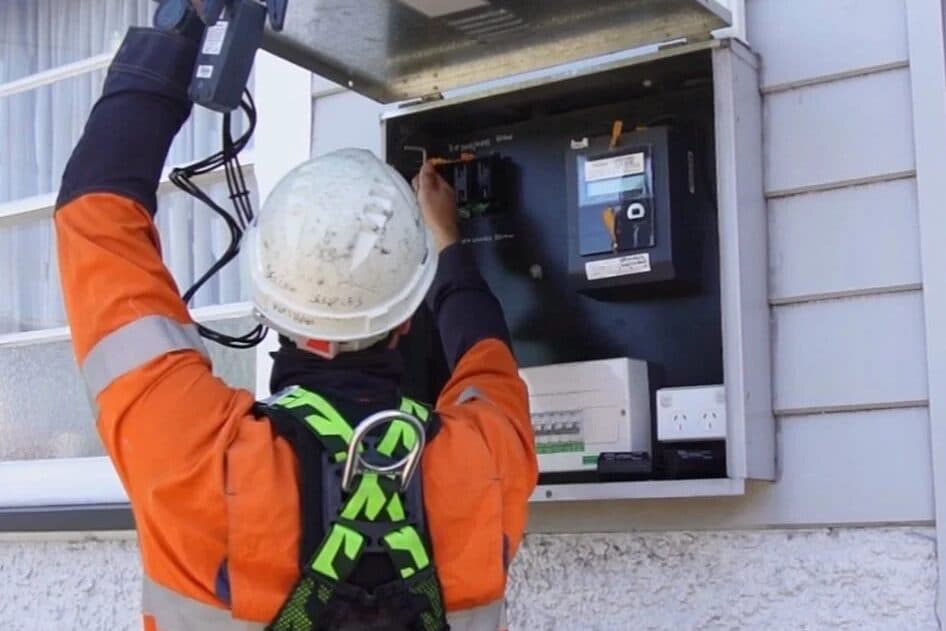
- Whether the meter board or switchboard is old or has been the subject of a notice, so related work can be assessed together.
Calling AB Electrical
For a fallen, leaning or sparking pole, call Ausgrid first on 13 13 88, then call 0405 343 343 from a safe place. For an inspection, a defect notice or planned replacement, send an enquiry with your address, photos taken from a safe distance and any notice number, and the same electrician will handle the assessment, Ausgrid coordination and replacement through to reconnection.