A defect notice from Ausgrid can be unsettling, particularly when it arrives with a deadline. It is not a fine, and it does not mean the power is about to be cut off without warning. It is the distributor telling you that part of the electrical supply arrangement at your property, for which you are responsible, needs attention.
This guide explains what the notice is, why they are issued on the Central Coast, where the boundary between the network and your installation sits, and how the work is arranged.
What a defect notice is and who issues it
Ausgrid is the electricity distributor for the Central Coast. It owns and maintains the poles, wires and equipment of the network up to a defined point at each property. Beyond that point, the equipment belongs to the customer, even though it carries network electricity.
When an Ausgrid inspector, a crew working nearby or a metering contractor sees a problem with customer-owned supply equipment, Ausgrid can issue a defect notice. The notice identifies the equipment, describes the defect, states what needs to be done and gives a timeframe. It is usually posted or left at the property, and it carries a notice number.
The notice is a formal requirement under the rules that govern connection to the network. Ignoring it can eventually result in the supply being disconnected, so it should be dealt with rather than filed.
Common reasons a notice is issued
On the Central Coast, the most common defects relate to overhead connections and ageing installations:
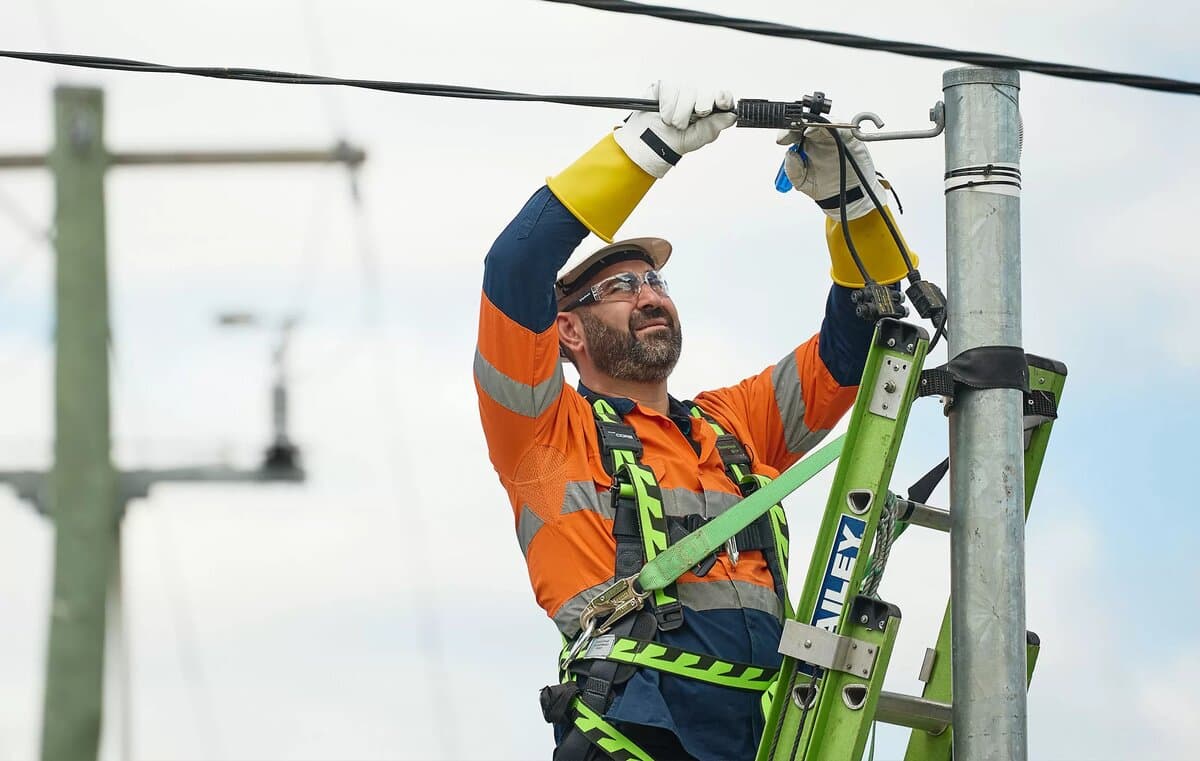
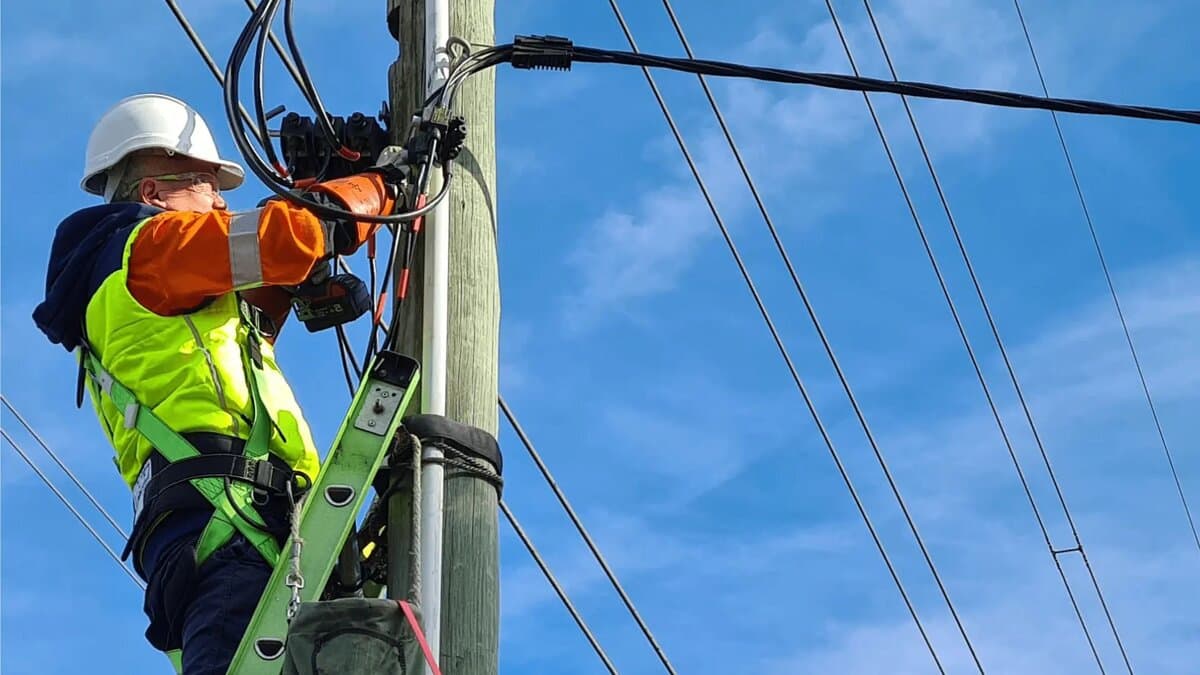
- Deteriorated service cable or point of attachment. The overhead service line runs from the street pole to a bracket on the house or a private pole. The cable insulation can crack, and the bracket, insulator or the timber it is fixed to can rot or pull away.
- Private pole condition. Rot at the ground line, lean, termite damage or rusted steel on a customer-owned pole.
- Tree contact. Branches growing into or rubbing on the service line. The notice may ask for pruning as well as electrical repair; tree work near live conductors is specialist work, not a job for a household saw.
- Unsafe consumer mains. The cables between the point of attachment and the main switchboard may be undersized, damaged, exposed or inadequately supported.
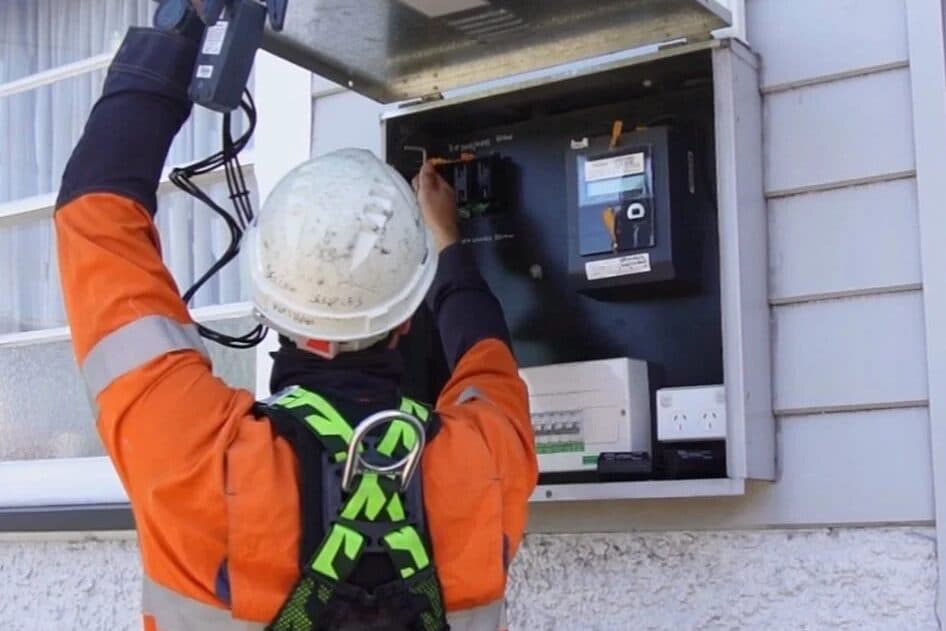
- Meter board condition. A rotten or damaged meter panel, an enclosure that does not close, exposed live parts, or a board that cannot safely accept a meter.
- Earthing and neutral defects found during meter checks.
Several of these can be found during a smart meter installation, when the metering contractor opens the enclosure and finds a board that cannot be worked on safely.
The boundary between the network and your installation
The point where responsibility changes is not always the meter. For an overhead supply it is generally the point of attachment on the house or private pole; for an underground supply it is generally at the connection pit or pillar. Everything on the property side of that point, including any private pole, the consumer mains, the meter board and the switchboard, is the customer's responsibility to maintain, although the meter itself belongs to the metering provider.
This is why the notice comes to you rather than being fixed by an Ausgrid crew. The network side is theirs; the defect is on your side. If you are unsure which side a piece of equipment sits on, the electrician can establish it from the installation. The Level 2 guide explains the ownership boundaries in more detail.
Timeframes must be followed
The notice states a period within which the defect must be rectified. The period reflects how serious Ausgrid considers the risk: an immediately dangerous defect may come with a very short timeframe or an immediate disconnection, while a deteriorating but not yet dangerous item is given longer.
Treat the date as fixed. If the work cannot be completed in time because of parts, access or scheduling, the electrician can explain the situation to Ausgrid, but that conversation needs to happen before the deadline, not after. Do not assume a notice has lapsed because nothing happened on the date; disconnection can follow later.
Why a Level 2 electrician is needed
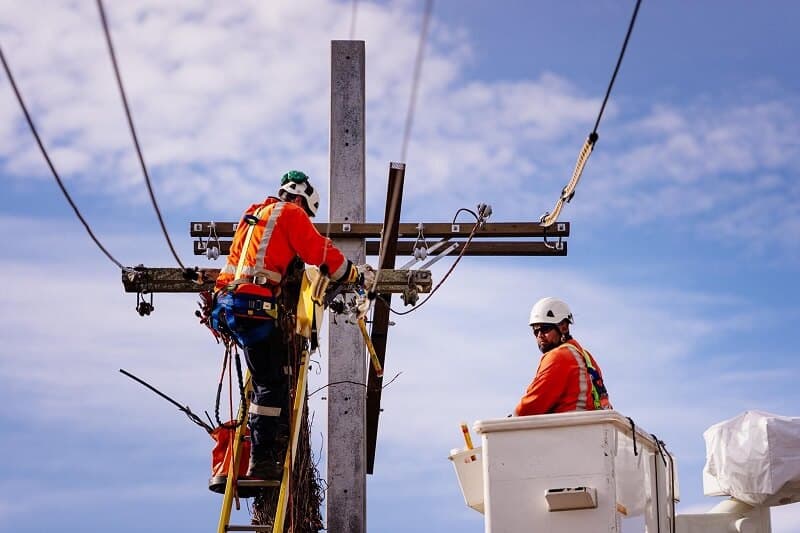
An ordinary electrical licence covers the wiring inside your installation. Work on the service line, the point of attachment, a private pole, the consumer mains connection and anything that requires the supply to be disconnected from the network needs an Accredited Service Provider authorised by Ausgrid for Level 2 work. Most defect notices involve at least one of those items, so the notice will usually say that a Level 2 ASP is required.
AB Electrical carries out Level 2 supply and connection work on the Central Coast, including defect rectification, consumer mains, private poles and disconnection and reconnection, with the distributor and metering coordination the work needs.
How the work is arranged
- Send the notice. A photo of the notice, the property address and the notice number are enough to start. The electrician reads what Ausgrid has identified and what it requires.
- Assessment. A site visit confirms the defect, checks the surrounding equipment and identifies anything else that would fail the same inspection. Fixing one item while leaving a related defect can lead to a second notice.
- Written quote. Planned rectification is quoted in writing once the scope is understood, including any switchboard or consumer mains work that goes with it.
- Distributor coordination. The electrician lodges the required notifications with Ausgrid, arranges any network isolation and, where the meter board is involved, coordinates with the metering provider.
- Disconnection, work and reconnection. Supply is disconnected under the relevant authorisation, the defective equipment is replaced or repaired, the work is tested and the supply is reconnected. You are told in advance when the power will be off.
- Close-out. The electrician submits the completion paperwork so Ausgrid can record the defect as rectified, and you receive the compliance documentation for the electrical work.
If the notice relates to the meter board and you are also considering a switchboard upgrade, it is worth doing them together; see switchboard upgrades on the Central Coast.
Do not inspect the equipment yourself
Service lines, points of attachment, consumer mains and meter boards can be live even when the main switch is off. A deteriorated service cable is dangerous precisely because its insulation can no longer be trusted. Do not climb to look at the bracket, open the meter enclosure, prod a pole or pull vegetation away from a line.
If a service line or pole has fallen or is hanging low, stay at least 8 metres away, keep others and pets clear, and report it to Ausgrid immediately on 13 13 88. If there is smoke, fire or someone has received a shock, call 000. A tingle from a tap or metal fitting is also an emergency: keep clear and call Ausgrid.
A photograph taken from ground level at a safe distance is all that is useful to send. Nothing more is needed from you before the electrician attends.
Calling AB Electrical
If the notice describes an immediate hazard, or the supply has already been disconnected, call 0405 343 343 from a safe place; availability and arrival timing are confirmed on the call. For a notice with a stated timeframe, send an enquiry with a photo of the notice, the property address and the notice number, and the same electrician will handle the assessment, Ausgrid coordination and rectification through to reconnection.