Test and tag checks whether plug-in electrical equipment is safe to keep using. For a business, the right testing schedule depends on the equipment, how it is used and the conditions it is exposed to—not simply whether the premises is called an office, shop or kitchen.
AB Electrical provides commercial electrical testing on the Central Coast. One-off visits and ongoing arrangements are assessed and quoted for the site.
What test and tag covers
Equipment can include:
- Computers, monitors and other plug-in office equipment.
- Kettles, microwaves and other kitchen appliances.
- Power tools and workshop equipment.
- Lamps, fans and portable heaters.
- Extension leads and power boards.
- Cleaning equipment.
- Chargers and power supplies.
The scope depends on the equipment and applicable requirements. Fixed wiring and hardwired equipment need a different assessment; a tag on a plug-in appliance is not a test of the building's wiring.
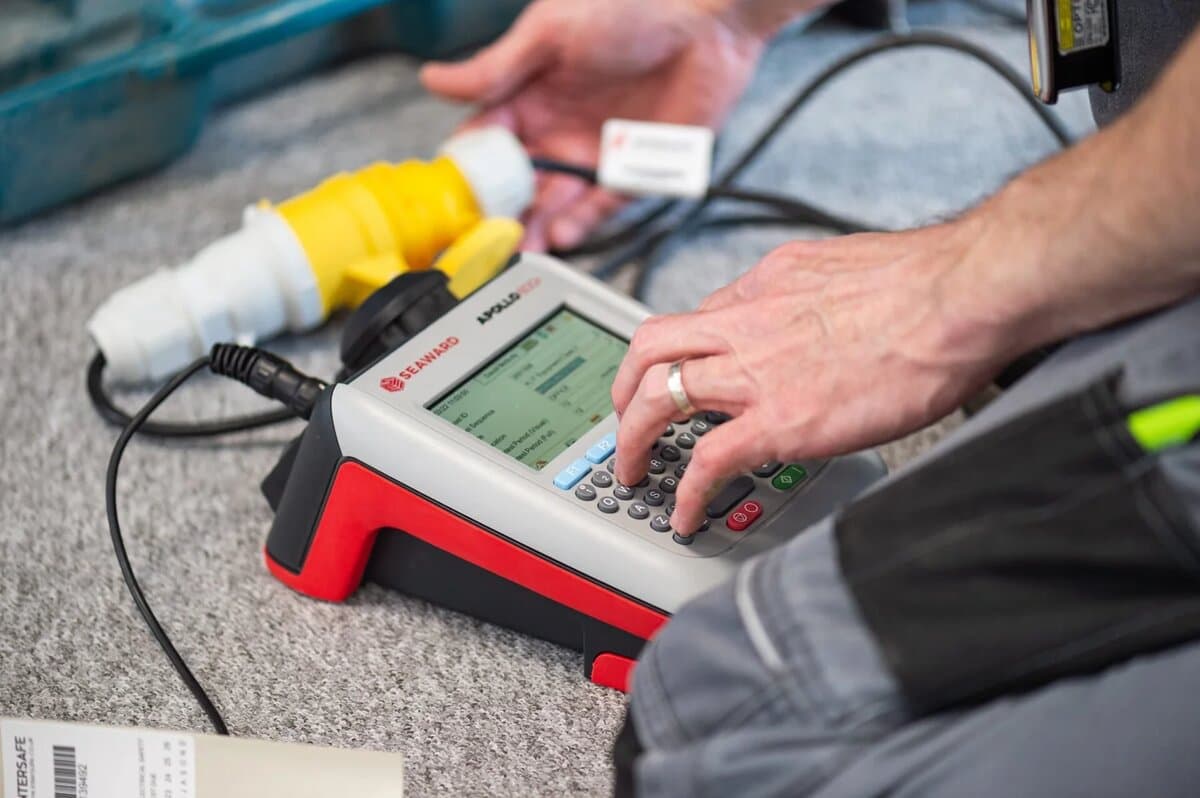
A competent person visually inspects the item and carries out the tests appropriate to its construction and use. For example, a double-insulated appliance does not have the same protective-earth test as an earthed appliance.
Is it legally required in NSW?
Businesses have duties to manage electrical risks. NSW has specific inspection and testing requirements for plug-in electrical equipment used in conditions likely to damage it or reduce its life.
These conditions can include moisture, heat, vibration, dust, chemicals and mechanical damage. Commercial kitchens, outdoor work and workshops can contain this kind of “hostile operating environment”.
That does not mean every office item must be tested annually. The equipment and its actual use determine the assessment. A lease, insurer or site operator may also set requirements that need to be checked separately.
SafeWork NSW explains workplace electrical inspection and testing duties (opens in new tab). Test records help manage the duty; a tag alone does not establish that every electrical risk at a site is controlled.
How often should equipment be tested?
A competent person sets the interval using the applicable requirements, relevant standards, manufacturer guidance and operating conditions.
| Setting | What affects the testing schedule |
|---|---|
| Office | Whether equipment stays in place or is moved, damaged or exposed to wear |
| Retail | Public access, cleaning, movement of equipment and lead damage |
| Hospitality kitchen | Moisture, heat, cleaning chemicals and frequent handling |
| Construction | Construction-specific requirements and exposure to site damage |
| Workshop | Dust, vibration, impact, chemicals and equipment use |
| Hire equipment | Requirements before hire and during ongoing use |
| Healthcare | Equipment-specific requirements; medical equipment can need separate specialist testing |
Do not copy another business's interval without checking that it suits your equipment. Visual checks between scheduled tests still matter, and damaged equipment should be removed from use immediately.
What a visit covers
- Confirm the scope — identify equipment, use and the environment.
- Visual inspection — look for damage to plugs, leads, housings and controls.
- Appropriate electrical tests — selected for the item and applicable requirements.
- Results and identification — record the item, date, result, person carrying out the test and when the next test is due.
- Tagging where applicable — identify the test status and next due date.
- Register update — retain a usable record of equipment and results.
- Failure handling — remove unsafe items from service and explain the next step.
Keep the required record until the next test or until the equipment is permanently removed from use or disposed of. A previous register can make administration easier, but all equipment due for inspection and testing still needs to be checked. Repeat visits are not limited to new or changed items.
What affects the cost?
Equipment count is only one factor. Access, shutdown windows, equipment type, location across the site and the condition of existing records also affect the quote.
Indicative planning ranges are:
- Small office, around 15–30 items: $280–$640.
- Retail shop, around 20–50 items: $380–$780.
- Hospitality kitchen, around 30–80 items: $580–$1,200.
- Workshop or small industrial site, around 50–150 items: $780–$1,800.
These are guide ranges, not AB Electrical quotes. Ask what the visit includes and whether repairs, retests, access outside trading hours or specialist equipment are separate.
What happens to failed equipment?
A failed item must not stay in use while the business decides what to do. The next step may be:
- Remove and replace it.
- Arrange an appropriate repair, followed by the required checks before reuse.
- Contact the supplier or manufacturer about any applicable warranty.
The report should identify failed items clearly enough that staff cannot accidentally put them back into service.
Common mistakes to avoid
- Treating a tag as a guarantee until the next date. Equipment can be damaged after testing.
- Ignoring wear between visits. Staff should report damaged leads, plugs or housings.
- Skipping due equipment on repeat visits. A register does not replace inspection and testing.
- Using an arbitrary annual schedule. The interval must suit the actual risk and requirements.
- Leaving failed equipment available to use. Isolate it from normal workplace equipment.
- Assuming test and tag covers fixed wiring. Switchboards, circuits and hardwired equipment require their own assessment.
How AB Electrical arranges the work
We review the premises, equipment and access needs before quoting. The scope identifies what will be tested, what records will be supplied and any agreed follow-up arrangements.
Ongoing commercial programmes are considered case by case. Account terms are available for ongoing commercial customers, with the terms agreed directly.
What to do next
Contact AB Electrical with the site address, type of premises, approximate equipment count and any existing register or site requirements. Include your trading hours if access or testing could interrupt the business.
For broader electrical maintenance, see the commercial service page.
For an urgent fault at your premises, such as an appliance that smells of burning, a lead that has caused a shock or a circuit that keeps tripping, keep clear of the equipment and call 0405 343 343 from a safe place. For scheduled testing, send an enquiry with the details above and photos of the equipment register or work areas only if they can be taken safely.