Emergency lighting helps people find their way out when normal lighting fails. If you manage a building or commercial tenancy, the useful starting point is the building's fire safety schedule and existing maintenance records.
AB Electrical can assess commercial emergency lighting and exit signs, explain faults and quote the electrical testing or repair work required. A routine test record is not the same as an annual fire safety assessment.
What emergency lighting covers
A system may include:
- Emergency luminaires — fittings that provide light when the normal supply fails.
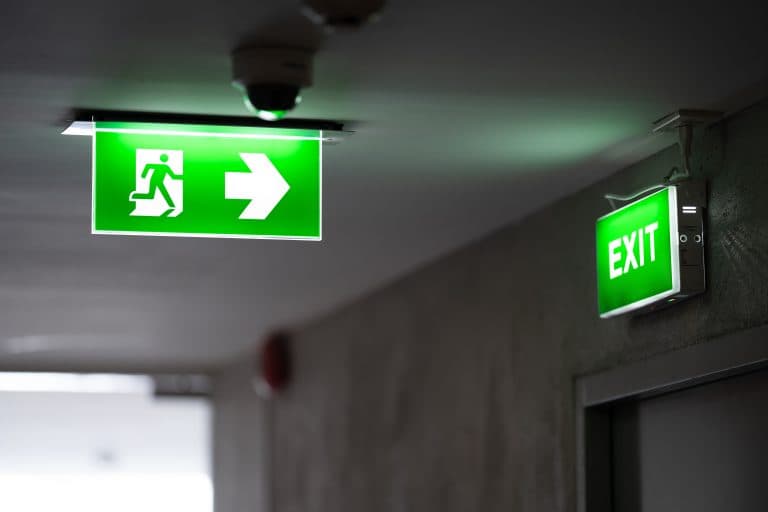
- Illuminated exit signs — identifying the way out.
- Directional signs — helping occupants follow the escape route.
The required positions and performance depend on the building and its approved design.
Where to check the requirements
Offices, shops, warehouses, workshops, public buildings and shared areas can have emergency-lighting requirements. Building classification alone is not enough to decide exactly what must be installed.
Start with:
- The fire safety schedule and any approved design documents.
- Existing test records and equipment register.
- Any defect notices or recent alterations.
- The relevant building approval and applicable standards.
Do not assume a small tenancy needs no emergency lighting, or that an existing fitting proves the layout is adequate. A changed partition, exit or use of a room can affect the assessment.
Standards and testing
The AS/NZS 2293 series covers emergency lighting design, installation, equipment, inspection and maintenance. Under the relevant maintenance programme, six-monthly testing includes a battery-duration test—not just a quick check that a fitting turns on.
A 90-minute duration test is commonly required for the installed system. The actual test and maintenance requirements must match the applicable standard and the building's schedule. Emergency-lighting manufacturer Clevertronics describes the six-monthly 90-minute test (opens in new tab).
Failed fittings need prompt attention, with the defect and required action clearly recorded. A test must not be described as a pass when failures remain.
Who is responsible?
The building owner remains responsible for the building's fire safety obligations. An owners corporation, tenant or property manager may organise particular work under the ownership or lease arrangements, but those arrangements should be clear.
NSW distinguishes essential fire-safety maintenance from annual assessment. The AS 1851-2012 maintenance changes took effect on 13 February 2026; they do not put every fire-safety measure under that standard. Emergency exit lighting is not covered by AS 1851-2012 itself; maintenance must follow the relevant fire safety schedule or original design requirements. Annual fire safety assessments require the appropriately accredited practitioner. See NSW's building-owner guidance (opens in new tab).
An electrician's test report can support the building's records. It should not be presented as a substitute for every statutory assessment or statement.
What an inspection can cover
The agreed scope may include:
- Register check — identify fittings and compare them with existing records.
- Visual inspection — check damage, condition and visibility.
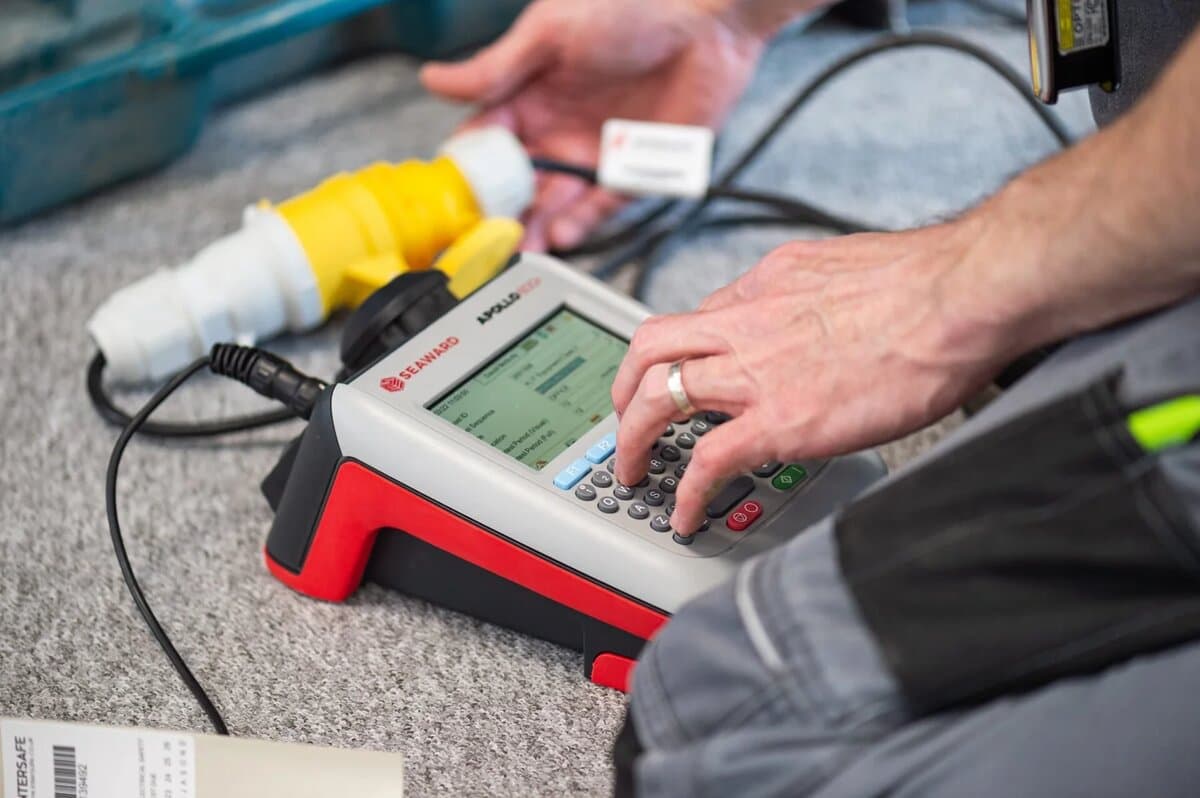
- Operation and duration testing — test against the applicable requirements.
- Battery and charging checks — investigate failures.
- Results — record each fitting's outcome and any limitations.
- Defect list — identify repairs, replacements or further assessment needed.
- Follow-up testing — confirm repaired equipment before recording a satisfactory outcome.
Plan testing around the building's use, occupants and any access constraints. The test report should distinguish what was tested from what remains unresolved.
Common failures
Possible findings include:
- A battery that no longer sustains the required duration.
- A lamp or LED module that does not illuminate.
- A charging fault.
- Damaged or obscured fittings.
- Exit signs that are difficult to see.
- Changes to the layout that need a design or coverage review.
The repair may involve a component or a complete fitting. Do not assume replacing a battery solves every duration-test failure.
What affects the cost?
Fitting count, height, access, testing arrangements, condition and the quality of existing records affect the quote.
Indicative planning ranges include:
- Small site with around 5–15 fittings: $280–$450 for an inspection visit.
- Larger site with around 20–50 fittings: $450–$850 for an inspection visit.
- Typical fitting replacement: $180–$420 supplied and installed.
- Initial site review and register work: $400–$900, depending on scope.
These are guide ranges, not AB Electrical quotes. Confirm the testing scope and whether repairs, additional access equipment or separate fire-safety assessment are included.
If the records are missing
Gather the fire safety schedule and any documents the owner or previous contractor holds. An initial review can:
- Identify the existing fittings.
- Establish the applicable testing scope.
- Carry out and record the agreed tests.
- List defects and any gaps requiring further assessment.
- Set out the next maintenance steps.
Missing records should be noted and resolved; they are not a reason to assume the system passes.
How AB Electrical arranges the work
We review the building, available records and access needs before quoting. The proposal identifies the electrical work and reporting included.
Ongoing commercial maintenance is considered case by case. Any recurring visits are agreed for the site rather than promised automatically. Account terms are available for ongoing commercial customers.
What to do next
Contact AB Electrical with the address, type of premises, approximate fitting count and available fire-safety or maintenance records. Mention any known failure or defect notice.
For related electrical work, see the commercial service page.
For an urgent fault at your premises, such as a burning smell, sparking or a loss of power affecting safety systems, call 0405 343 343 from a safe place. For testing, repairs or an assessment, send an enquiry with the details above and photos of the fittings or test records only if they can be taken safely from floor level.