Landlords, property managers and strata committees carry ongoing electrical duties that do not end when a tenancy starts or a building is handed over. Smoke alarms need to work for the whole tenancy, urgent electrical repairs need prompt attention, and the records for that work need to exist when someone asks for them.
This guide covers what a landlord or agent is expected to keep on top of in NSW, where the line between strata common property and an individual lot sits, and how AB Electrical works with property managers on the Central Coast. Confirm current requirements with NSW Fair Trading or your strata manager before relying on any summary, including this one.
Smoke alarms in rental properties
Smoke alarm obligations are ongoing rather than a once-off at the start of a lease. In general terms, a landlord in NSW is expected to:
- Have working smoke alarms installed in the locations required for the property, on every level.
- Check each alarm at least once a year to confirm it is working.
- Replace removable batteries at least annually, or as the manufacturer directs for sealed units.
- Repair or replace an alarm that is not working within the short window the tenancy rules allow after learning of the fault.
- Replace every alarm within ten years of its manufacture date, or earlier if the manufacturer says so.
Tenants must not remove or disable an alarm, and they are expected to tell the landlord or agent when one is not working. The landlord then has a limited time to act.
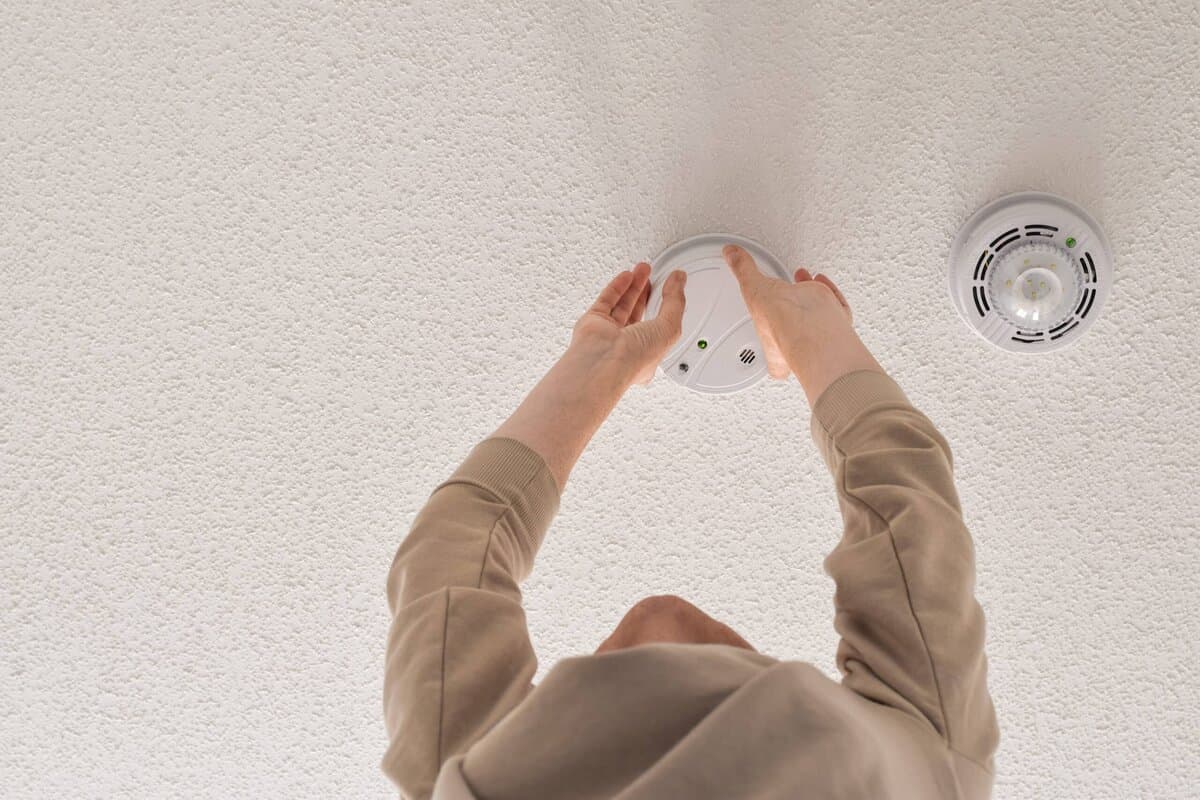
Hardwired alarms can only be repaired or replaced by a licensed electrician. Many agencies have all alarm work done and recorded by the one licensed contractor so the annual record is consistent. Our smoke alarm page describes what an alarm visit covers, and the NSW smoke alarm guide goes into placement and alarm types.
Safety switches
A safety switch, or residual current device, cuts the power quickly when it detects current leaking to earth, which is what happens when a person receives a shock. NSW does not currently require every existing rental to be retrofitted with safety switches on every circuit, but new circuits and most alteration work bring the requirement with them, and a rental without that protection is carrying a risk that is straightforward to remove.
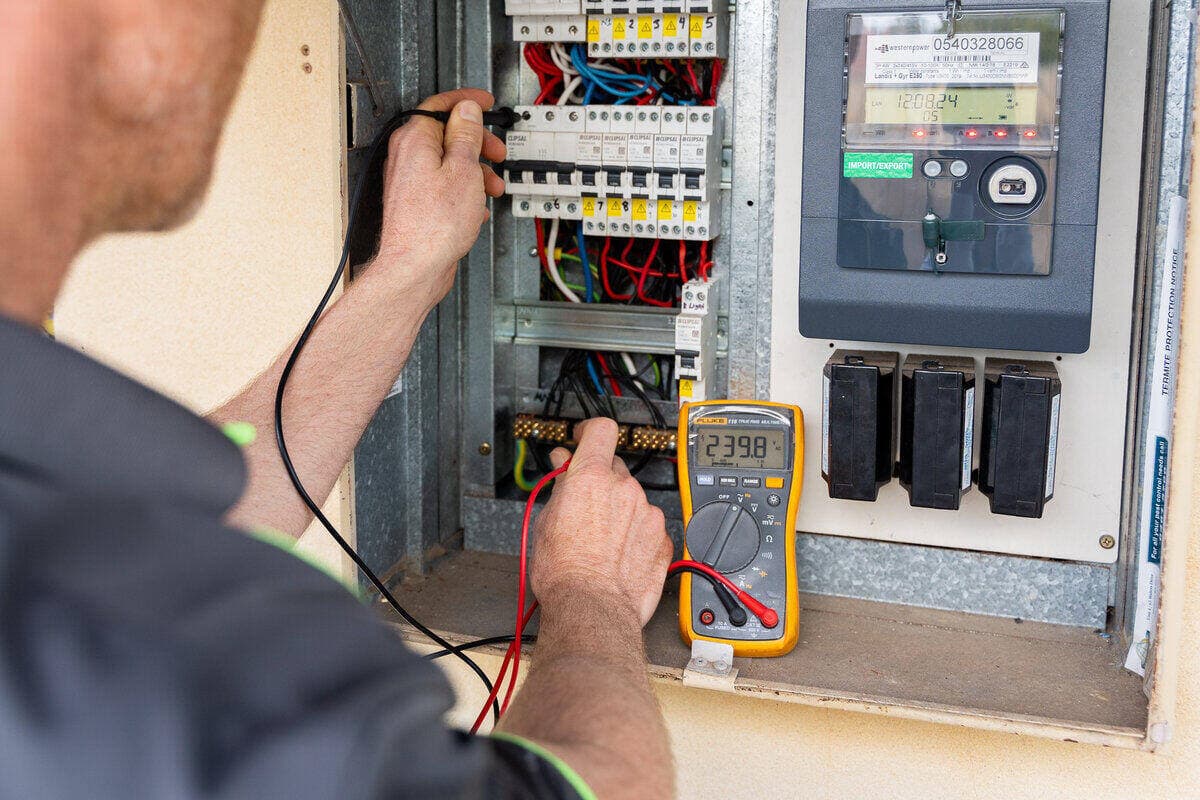
For a landlord, the practical questions are whether the switchboard has safety switches at all and which circuits they cover, whether they are tested periodically and recorded, and whether the board is old enough that ceramic fuses or early breakers are still in use. Any of those is a reason to have the board assessed; the switchboard upgrades guide explains what an assessment looks for. If a safety switch at a rental keeps tripping, the tenant should not keep resetting it.
Repairs and urgent repairs during a tenancy
Under a residential tenancy, the landlord is responsible for keeping the premises in reasonable repair, and electrical faults fall squarely into that. NSW tenancy rules distinguish between general repairs, which are handled in a reasonable time, and urgent repairs, which need prompt action. A dangerous electrical fault or a failure of essential services such as hot water or cooking generally sits in the urgent category.
For an agent, the practical steps are:
- Get the tenant to describe what happened, what is affected and whether anyone has been shocked or noticed burning smells.
- If there is smoke, fire or immediate danger, the tenant should leave and call 000 before anyone calls an electrician.
- If anyone has felt a tingle or shock from a tap, metal fitting or appliance, keep everyone away from it and report it to the electricity distributor immediately. For Ausgrid, that is 13 13 88.
- Tell the tenant not to open the switchboard cover or investigate wiring themselves. Do-it-yourself electrical work is illegal in NSW.
- Call an electrician with the property address, the tenant's contact details and a plain description of the fault.
Tenants can arrange urgent repairs themselves in limited circumstances if the landlord cannot be reached, so an agency that responds quickly with a licensed electrician keeps control of the work and its records. Our emergency electrician line takes calls around the clock.
Strata: common property versus the lot
In a strata scheme, electrical responsibility is split between the owners corporation and the individual lot owner. The general principle is that the owners corporation maintains common property, which typically includes the main switchboard, consumer mains, common area lighting, the wiring that serves more than one lot and anything in the shared structure. The lot owner is responsible for the wiring, switchboard and fittings within the boundaries of their lot.
Where that boundary sits depends on the strata plan and the scheme's by-laws, and it is not always intuitive. A cable through a common wall serving one apartment might be common property; a sub-board inside the apartment might be the lot owner's. Before anyone agrees to pay for a repair, have the strata manager confirm which side of the line the fault is on. AB Electrical can describe where the fault is and what it connects to, which helps the strata manager make that call.
Strata schemes also carry smoke alarm duties in common areas, and where lots are rented the same rental obligations apply to each landlord. Work on the consumer mains is Level 2 work and needs an authorised Level 2 electrician.
Records to keep
Good records turn a compliance question into a filing exercise. For each property, a landlord or agent should hold:
- The certificate of compliance for electrical work for every installation, repair or alteration, including like-for-like replacement of hardwired alarms.
- The date, result and who carried out each annual smoke alarm check.
- The manufacture date of each alarm, so ten-year replacement can be scheduled rather than discovered.
- Safety switch test dates.
- Any switchboard assessment or written quote, even if the work has not gone ahead.
AB Electrical provides the applicable electrical compliance records for work completed, and the same electrician who did the work can answer questions about it later.
How AB Electrical works with property managers
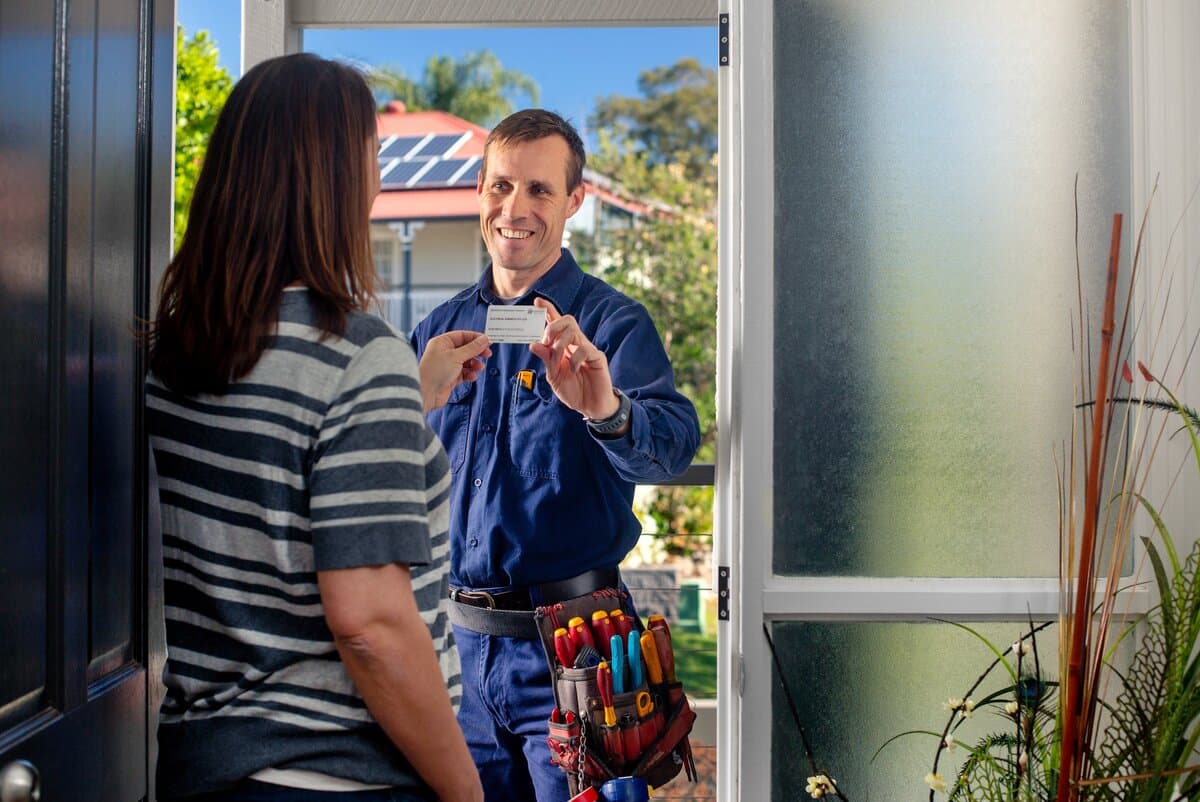
The property-management side of the job is mostly about access and communication. The one electrician handles the job from first call to completion, so the person who takes the booking is the person who attends the property. In practice:
- Access. Keys can be collected from the agency, or the tenant contacted directly to arrange a time, whichever the agency prefers.
- Reporting. After the visit, the agency receives a plain-language description of what was found and what was done, along with the compliance records that apply.
- Planned work. Anything beyond the immediate fault, such as replacing an ageing board or adding safety switches, is quoted in writing once the scope is understood.
- Urgent faults. These are discussed on the call, where availability and arrival timing are confirmed.
Confirming current rules
Tenancy law, smoke alarm requirements and strata obligations are updated from time to time, and this guide describes them in general terms only. Check the current position with NSW Fair Trading (opens in new tab) before relying on a timeframe or exception, and ask your strata manager where a strata plan is involved.
Calling AB Electrical
For an urgent electrical fault at a rental or strata property, call 0405 343 343 from a safe place. For planned work such as alarm replacement, safety switches or a switchboard assessment, send an enquiry. Include the property address, whether it is a rental or strata lot, the best contact for access and a short description of what needs attention.