A safety switch trips when it detects a current imbalance that may indicate leakage to earth. It helps reduce electric-shock risk, but a trip does not identify the fault or prove that the rest of the installation is safe.
For smoke, fire or immediate danger, leave and call 000. Keep away from wet, damaged or hot electrical equipment. For a shock or tingle, do not touch or retest the location; contact emergency services and your electricity distributor.
Is it a safety switch?
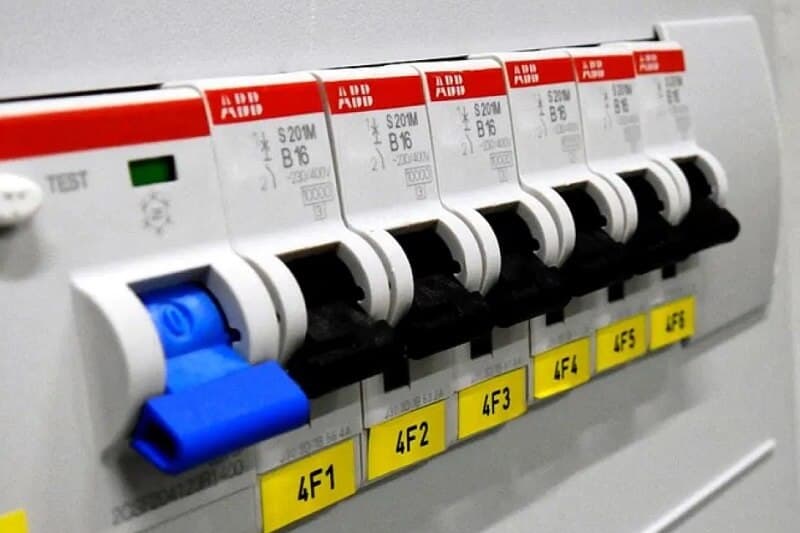
A residual current device (RCD) is commonly called a safety switch and usually has a test button. A combined device (RCBO) also protects against overload and short circuits. An ordinary circuit breaker does not provide the same earth-leakage protection.
Look only at labels visible without opening covers. If you are unsure which device has tripped, describe it to the electrician. Our circuit-breaker guide explains the different types.
Possible reasons for tripping
An appliance or its lead
A damaged lead, insulation fault or moisture inside equipment can contribute to earth leakage. Note which appliance was in use, but do not reconnect it to prove the connection.
Fixed wiring or hardwired equipment
A fault can be in the circuit itself or equipment connected to it, such as a hot-water system or fixed lighting. These cannot be investigated safely by unplugging ordinary household appliances.
Moisture
Rain, a leak or recent cleaning can be a useful clue. It does not establish where water has entered or whether the circuit is safe once it dries. Keep water-affected equipment out of use until assessed.
Several small leakage currents together
An RCD may protect more than one circuit or several appliances. Their combined leakage can matter even when there is no single obvious damaged item. An electrician needs to assess the arrangement and test results.
Wiring connections or the device itself
Connection problems and a defective RCD are also possibilities. Age alone does not diagnose a failed safety switch, and replacing it without investigating the circuit may leave the original problem unresolved.
What to do safely
Leave a repeatedly tripping circuit off. Do not bypass the safety switch, hold it on or keep trying to restore power.
If there are no warning signs, the board is dry and undamaged, and you can safely follow the manufacturer's user instructions, one reset may be appropriate. If it will not reset or trips again, leave it off and call. Where anything looks unsafe or you are uncertain, do not attempt a reset.
Tell the electrician what lost power, what was running and whether it followed wet weather or recent work. No photographs or testing are needed before seeking urgent help.
What fault-finding involves
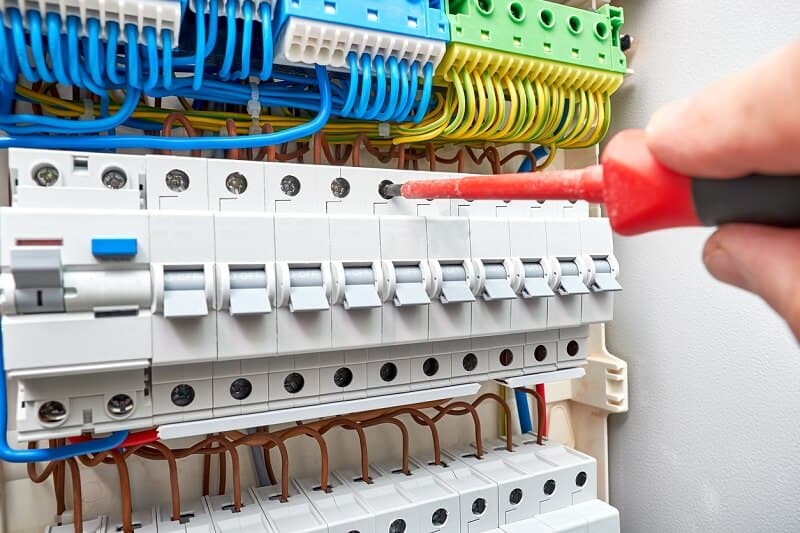
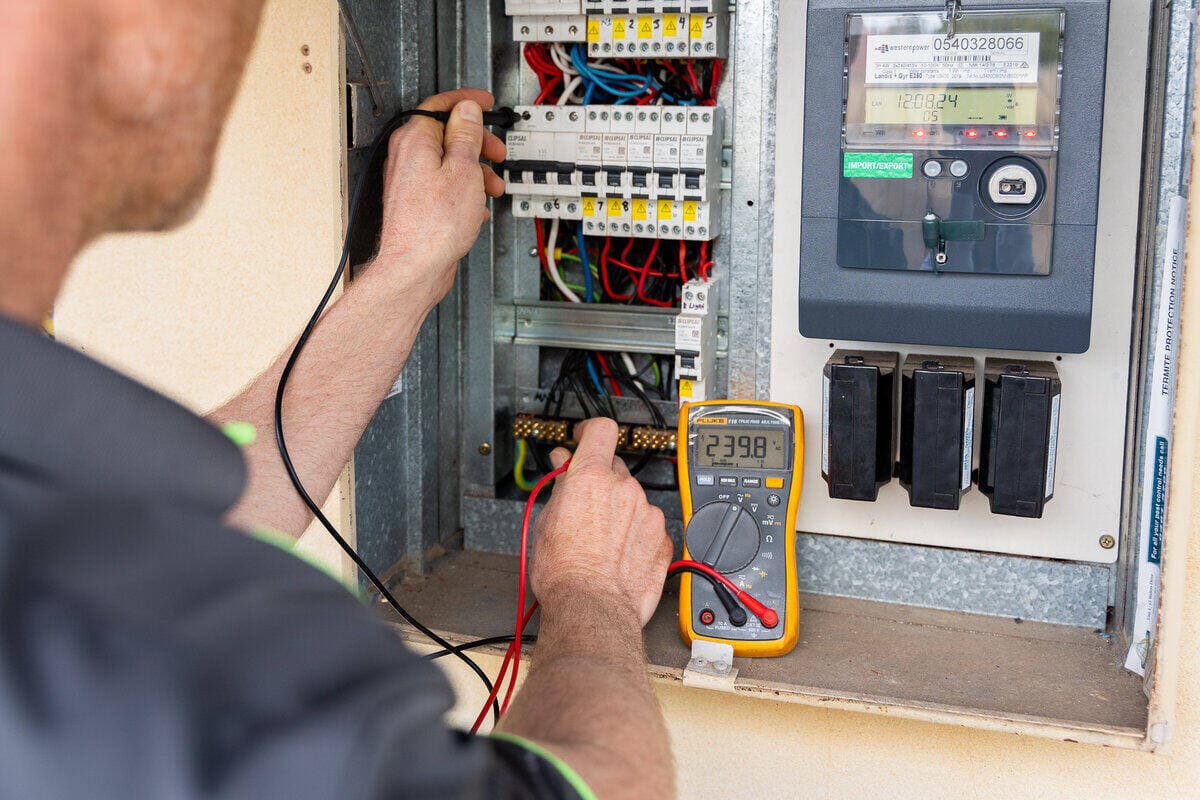
An electrician can identify the circuits protected by the device, check the installation and connected equipment, measure leakage or insulation condition as appropriate, and test the RCD's operation.
The outcome might be an appliance repair, wiring repair, replacement of a defective device or changes to circuit protection. It does not automatically require a new switchboard.
If the problem affects hot water, see possible electrical and plumbing causes. Do not open the system's electrical covers.
Testing a working safety switch
Routine user testing is different from fault-finding. Follow the test instructions and interval on the device or supplied by its manufacturer. Plan for the interruption to equipment on the protected circuits.
If the test does not operate the device, or it will not reset afterwards, arrange an electrician. A successful test-button check does not assess every part of the wiring.
When it is urgent and when it can wait
A safety switch that trips once, resets and stays on may have responded to a momentary fault or a damp appliance; note what was running and keep an eye on it. One that trips again, will not reset, or trips with no obvious appliance in use needs an electrician. Leave it off until then.
Treat it as urgent when the trip follows a shock or tingle, water reaching equipment, a burning smell, heat or damage at the board, or when it removes power from medical equipment, refrigeration or a business that cannot operate without it. Those calls are taken at any hour. A trip that leaves a non-essential circuit off, with no warning signs, can be arranged as a planned visit.
Common misunderstandings
The safety switch is faulty because it keeps tripping. Repeated tripping is more often the device working correctly in response to leakage somewhere on the circuit. Replacing it without testing usually moves the problem to a new device.
Unplugging everything and resetting proves the wiring is fine. It only shows that the leakage was not present at that moment. Moisture, warm equipment and intermittent faults come and go, and fixed equipment such as hot-water systems and ovens cannot be unplugged.
One safety switch protects the whole house. Many boards have one device covering several circuits, and some circuits may have no earth-leakage protection at all. An electrician can identify which circuits are covered and whether that arrangement suits the property.
The test button checks the wiring. It checks that the device trips when asked to. It does not test the circuits, the appliances or the connections.
Getting the fault assessed
AB Electrical handles electrical fault-finding and switchboard protection work. Call from a safe place, mention any hazards and explain what has lost power. We confirm attendance arrangements on the call.
For shocks or tingles, follow Ausgrid's immediate safety advice (opens in new tab); do not wait for a website response.
For a trip that follows a shock, water, a burning smell or damage, call 0405 343 343 from a safe place. For a circuit that can safely stay off until a planned visit, send an enquiry with your suburb, a short description of what trips and when, and photos of the closed board only if they can be taken safely.