A full house rewire is one of the largest electrical jobs a home can have, and it is asked about far more often than it is actually needed. Many of the problems that prompt the question are better solved by a partial rewire, new circuits or a switchboard upgrade. The starting point is an assessment of the wiring that is actually there, not the age of the house.
This guide explains what a rewire involves, the signs that wiring condition should be checked, and how the work is staged in a home that people are living in.
What a rewire is, and is not
A full rewire replaces the fixed wiring throughout the house: the cables running through ceiling and wall cavities, the outlets, switches and light points they serve, and usually the switchboard and its protective devices. It is planned work, quoted in writing once the scope is understood.
A rewire is not the only answer to old or troublesome wiring. Depending on what the assessment finds, the appropriate work may be:
- A partial rewire — replacing deteriorated cable in one part of the house, such as the original section of an extended home, while sound later wiring stays in place.
- New circuits — adding dedicated circuits for a kitchen, air conditioning or a workshop where the existing circuits are sound but overloaded.
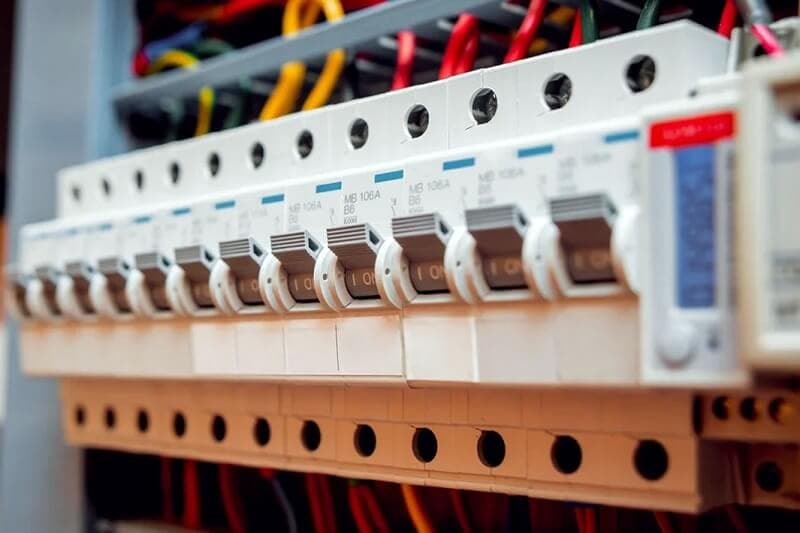
- A switchboard upgrade — replacing fuses with circuit breakers and safety switches, which improves protection without touching the cables in the walls. See when a switchboard upgrade is worth doing.
- Targeted repairs — fixing a damaged section, a poor connection or an unearthed outlet.
Each of these is a legitimate outcome. An electrician who recommends a full rewire should be able to explain what condition or fault makes the smaller options unsuitable.
Signs that wiring condition needs assessment
None of the following proves a rewire is required, but each is a reason to have the installation looked at rather than left.
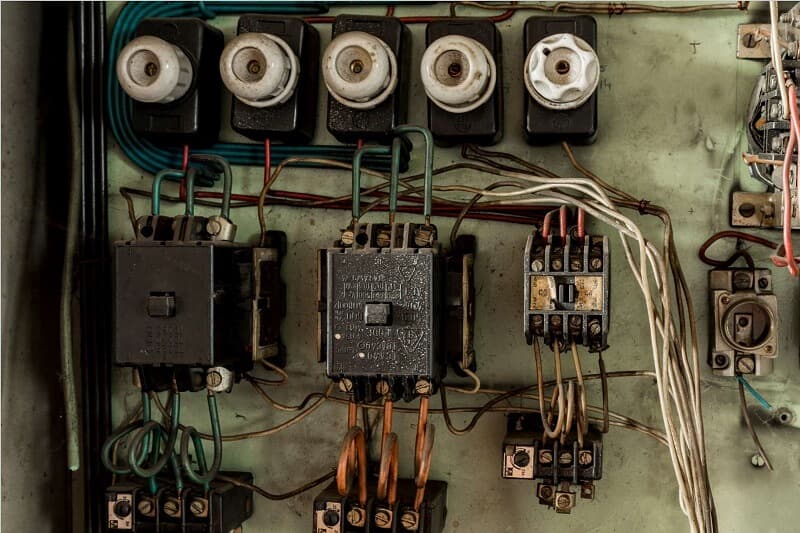
- Deteriorated rubber or cloth insulation. Some older cable types become brittle or crumble as they age, leaving conductors exposed inside cavities.
- Repeated faults. Circuit breakers or safety switches that trip regularly, fuses that keep blowing, or intermittent loss of power to part of the house.
- No earth at outlets. Older lighting and power circuits may lack an earth conductor, which limits the protection that can be provided.
- Lights dimming or flickering when appliances start, or outlets that feel warm, crackle or show discolouration.
- Rodent or water damage in the roof space, or evidence of previous overheating.
If you notice a burning smell, smoke, sparking or scorching, do not investigate. Leave the area and call 000 for fire or immediate danger. A shock or tingle from a tap or metal fitting is an emergency: keep clear and report it to the electricity distributor immediately (Ausgrid: 13 13 88).
Do not open covers, lift ceiling access panels to look at cable, or test anything yourself. Do-it-yourself electrical work is illegal in NSW, and inspecting old wiring is part of that work.
What an assessment establishes
An assessment by an electrician sets out what is actually installed and what condition it is in. It typically covers:
- The cable types present in each part of the house and their condition where accessible.
- Whether circuits are earthed and whether safety-switch protection exists.
- The switchboard, its protective devices, labelling and capacity for change.
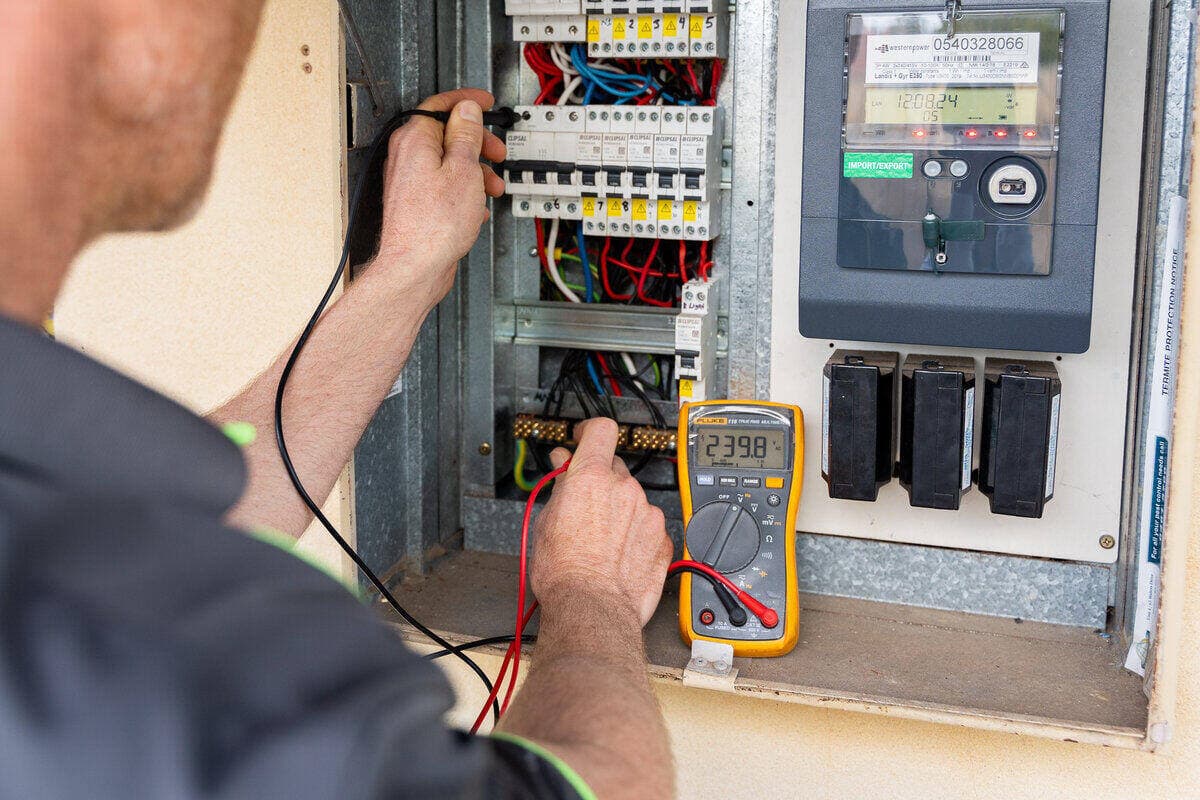
- Testing of insulation resistance and earth continuity on accessible circuits.
- The load the house currently draws and what you plan to add.
The result is a description of what needs replacing, what can stay and what is optional. Concealed wiring and inaccessible spaces limit what can be established without opening things up, and the assessment should say so. Our guide to older-house electrical work explains how records and inspection fit together.
Why age alone does not prove a rewire is needed
Houses are often rewired in stages. A home from the 1950s may have had its original cable replaced in the 1980s and its switchboard upgraded last decade, while another of the same age still has original cable in the ceiling.
Cable that is old but sound, earthed and correctly protected does not need replacement simply because of its date. Equally, a recently renovated house can have poor work behind fresh plaster. The condition, protection and suitability of the installation are what matter, and those are established by assessment rather than by the building's era.
How a rewire is staged in an occupied home
Most rewires happen while the household stays in the house, so the staging needs planning.
Access
Cable runs through the roof space, under the floor where there is one, and inside wall cavities. The electrician needs clear access to the ceiling manhole, sub-floor entry and each room in turn. Furniture is moved back from walls and items stored in the roof space may need to come out.
Ceiling and wall cavities
New cable is usually drawn through the existing cavities. Where a wall is solid or a cable route is blocked, small openings are cut in the lining to pass the cable through. The electrician should tell you in advance where cutting is likely and where it can be avoided.
Making good
Cutting is patched and painted afterwards. Agree before work starts who is responsible for plastering and painting, and whether it is included in the electrical quote or arranged separately.
Power interruptions
A rewire is usually done circuit by circuit so that the house is not without power for the whole job. Expect the supply to be off for parts of each working day, and plan for refrigerators, medical equipment and home offices accordingly. Any work at the connection point, or a switchboard replacement that needs the supply disconnected and reconnected, is arranged as Level 2 work with the distributor.
Testing and switchboard
Each new circuit is tested before it is put into service. The switchboard is usually replaced or reorganised at the same time so that every circuit has appropriate protection under the wiring rules (AS/NZS 3000).
Coordinating with renovations
A rewire fits naturally alongside a renovation, because linings are already open and the layout is being decided. Give the electrician the proposed plan, appliance list and any changes to heating, cooling or hot water early, so the rough-in happens before plasterboard goes up and finishes are complete.
Agree the sequence with the builder: rough-in, inspection of the cable before linings close, then fit-off of outlets, switches and fittings once painting is done. Where the renovation adds significant load, the assessment also considers whether the consumer mains and switchboard need upgrading; see the consumer-mains guide.
Records you receive
Electrical work in NSW must be carried out by a licensed electrician, and you should receive a Certificate of Compliance for Electrical Work when it is complete. Keep it with your property records. For a rewire it is worth also asking for a circuit schedule showing which breaker serves which area, and a note of any part of the old installation that was deliberately left in place. These documents matter for a future sale and for the next electrician who works on the house.
Calling AB Electrical
For an urgent fault, such as burning smells, repeated tripping or damaged wiring, call 0405 343 343 from a safe place; availability and arrival timing are confirmed on the call. For a rewiring assessment or planned work, send an enquiry with your suburb, the approximate age of the house, the symptoms you have noticed and any renovation plans, and the same electrician will handle it from the first call to completion.