
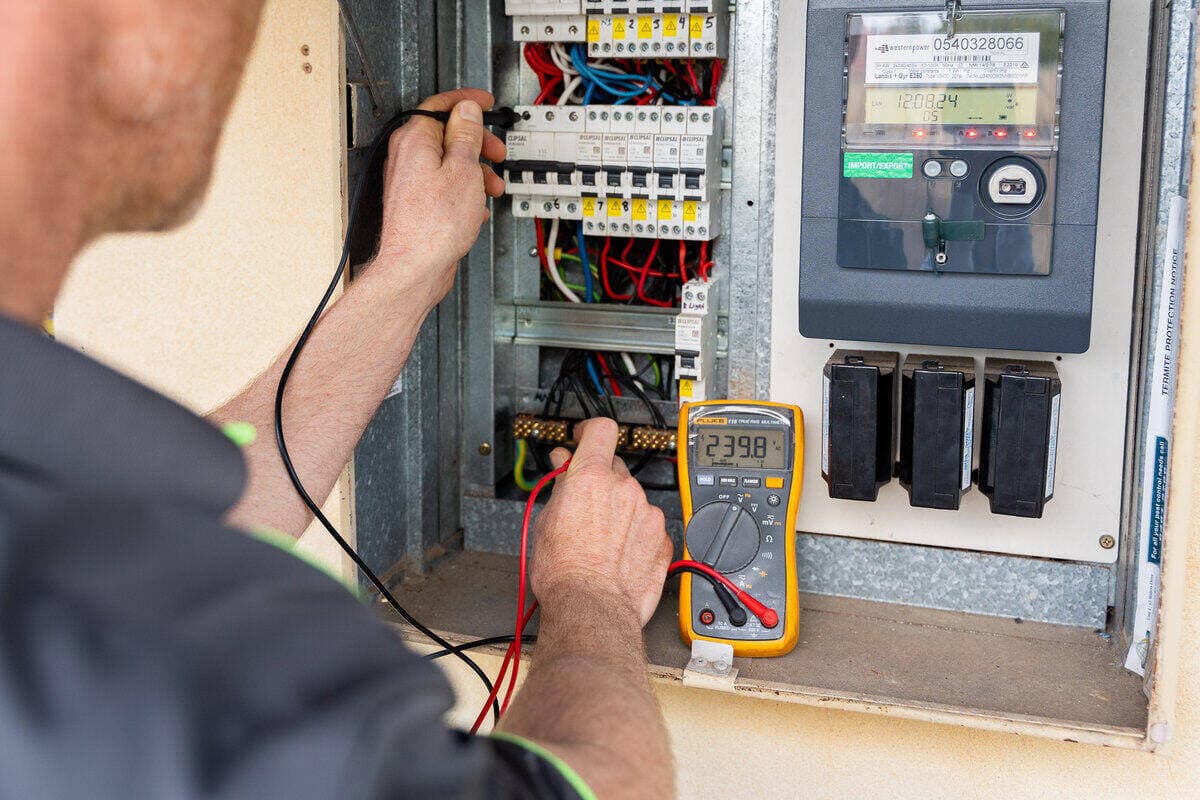
Buying an older home on the Central Coast is one of the most exciting decisions a family can make — and one of the riskiest if the electrical system has been quietly degrading for decades behind the walls. A standard pre-purchase building inspection will check the structure, the moisture, the pests, and the obvious wear and tear, but it usually does not go deep into the electrical system. That gap is where most post-settlement surprises hide. This guide is a checklist for what an electrician looks at during a pre-purchase electrical inspection, what counts as a red flag, and how to use the inspection report as a negotiation tool before settlement.
If you are about to make an offer on an older Central Coast home and want a Central Coast residential electrician to check the property before you commit, AB Electrical does pre-purchase inspections with a written report and clear costed recommendations.
Why a pre-purchase electrical inspection matters
A standard building inspection will note that the switchboard "looks old" or "appears to have been updated" — but it will not tell you whether it is compliant, whether the safety switches actually trip when tested, whether the wiring inside the walls is degraded, or whether the circuits can handle the way you plan to use the property. Those are the questions that decide whether the home is ready to move into or whether the first month is going to involve $5,000-$10,000 of unplanned electrical work.
The cost of a pre-purchase electrical inspection is small compared to the cost of finding the same problems after settlement. More importantly, the report becomes a negotiation tool — a documented list of work needed, with realistic costs, that you can use to either lower your offer or have the seller fix specific items before settlement.
What an electrician checks during a pre-purchase inspection
A thorough pre-purchase electrical inspection covers eight areas.
1. The switchboard
The switchboard is the single most important thing to inspect. The electrician checks:
- Type of board — modern enclosure vs old ceramic-fuse vs wooden-backed
- Protection devices — circuit breakers and safety switches (RCDs) on all circuits, or only some
- Capacity — how many circuits the board has, how many are spare, whether it can take additional circuits
- Condition — corrosion, scorch marks, loose connections, signs of overheating
- Labelling — whether circuits are clearly labelled or unknown
- Accessibility — whether the board is in a safe location with proper clearance
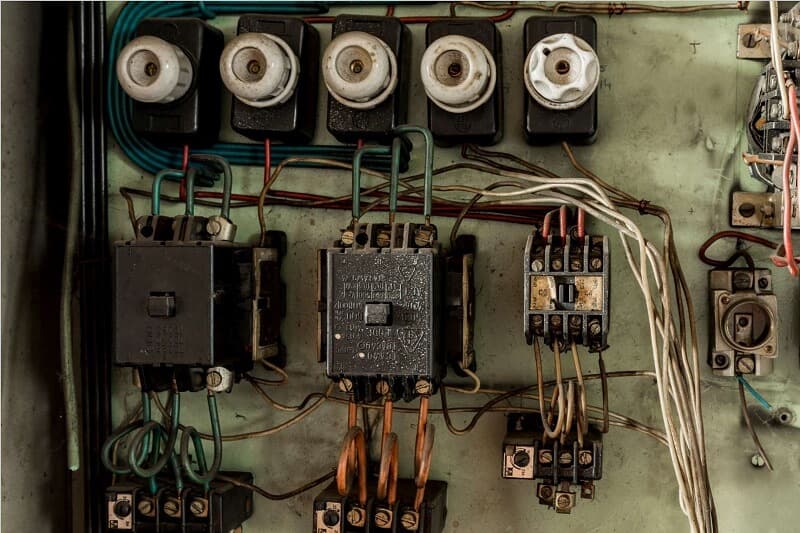
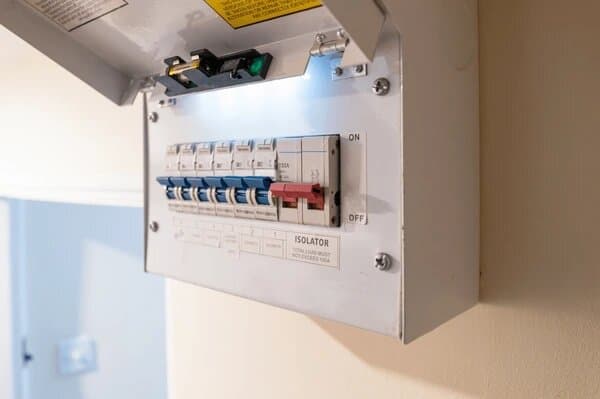
A modern board with RCDs on every circuit is a green light. An old ceramic-fuse board with no safety switches is a $1,800-$3,500 upgrade you should price into the offer.
2. The wiring
The electrician inspects accessible wiring in the roof space, sub-floor, and switchboard cavity to assess:
- Cable type — modern TPS copper, older rubber-insulated, cloth-insulated, or aluminium
- Cable condition — brittle, cracked, exposed, melted, gnawed by rodents
- Junction boxes — proper enclosures vs taped joints in the ceiling
- Cable runs — whether older runs have been left in place when newer cables were added
- Earthing — whether the property has a proper earth system
Cloth-insulated wiring from the 1950s and 1960s, aluminium wiring from the 1960s and 1970s, and any visibly damaged cable are flags that the property may need partial or full rewiring.
3. Powerpoints and outlets
The electrician walks through every room and checks:
- Total count — is there enough capacity for modern household use, or is the property reliant on extension leads and power boards?
- Condition — discoloured, cracked, loose, warm to touch, scorched
- Earthing — are outlets properly earthed (test with a plug-in tester)
- Polarity — are active and neutral wired correctly
- RCD protection — does each circuit have working safety switch protection
A property with too few outlets is annoying. A property with damaged or warm outlets is dangerous. Both should be on the report.
4. Lighting
Lighting is rarely a safety issue, but it can be a quality-of-life one. The electrician notes:
- Fittings — modern LEDs vs old halogen vs even older incandescent
- Wiring at the ceiling rose — exposed cable, brittle insulation, signs of overheating
- Switches — old single-pole vs modern, condition of contacts
- Coverage — whether each room has adequate lighting positions
Old halogen downlights with exposed wiring in the roof space can be a fire risk if installed without proper clearances. The report should call this out.
5. Smoke alarms
NSW requires interconnected photoelectric smoke alarms in specific positions. The electrician checks:
- Coverage — are alarms in the right positions
- Type — photoelectric vs ionisation, hardwired vs battery-only
- Age — manufactured date (alarms over 10 years old need replacing)
- Function — does the test button activate them
- Interconnection — do alarms trigger each other (required in many situations)
Smoke alarm work is one of the cheapest items on a typical inspection report ($150-$280 per unit) and is one of the highest-value safety items to fix.
6. Circuit-by-circuit testing
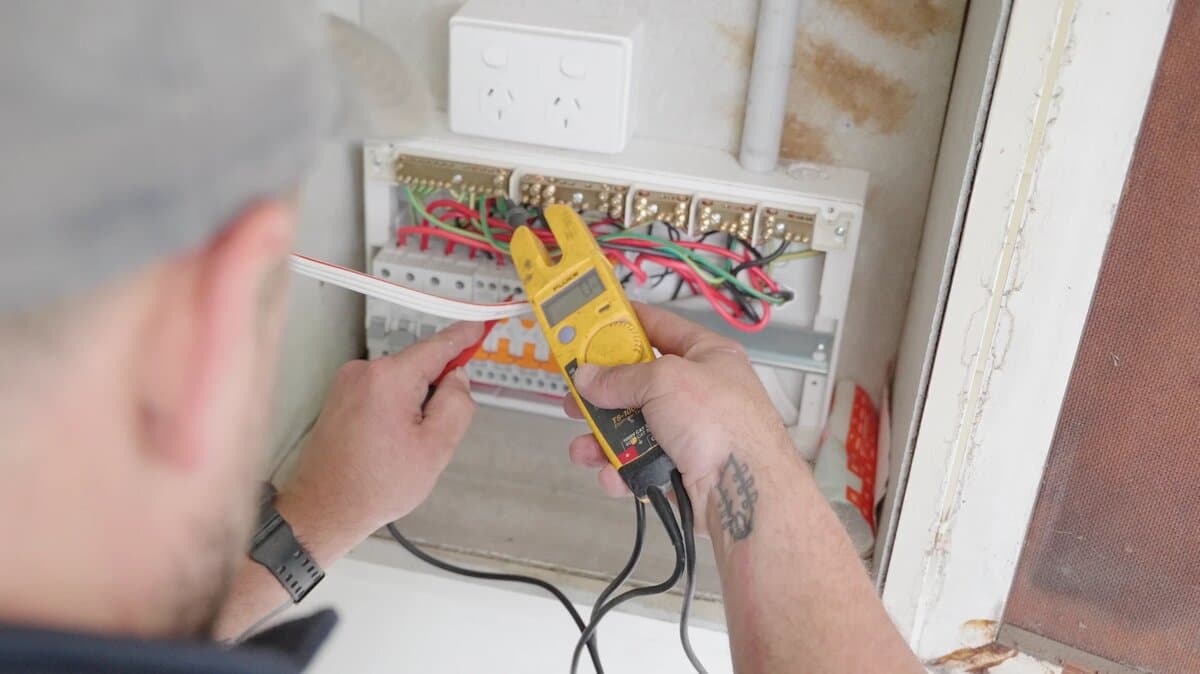
A proper inspection includes circuit-level testing:
- Insulation resistance — measures whether the cable insulation is breaking down
- Earth continuity — confirms the earthing system actually works
- Polarity — confirms outlets are wired correctly
- RCD trip test — confirms safety switches actually trip within their required time
This is where the inspection moves beyond "looks OK" to "actually OK by NSW wiring standards". Any failure here goes straight onto the report.
7. Hot water system, oven, and major appliance circuits
If the property comes with a hot water system, an electric oven, or hardwired air conditioning, the electrician checks:
- Dedicated circuit — is each major appliance on its own correctly-rated circuit
- Isolation switch — is there an accessible isolation point
- Connection condition — is the connection neat, secure, and protected
These are items that often need updating when an old appliance is replaced, so they go on the report as future-spend items.
8. The supply side — service line, meter box, consumer mains
The electrician checks the visible supply elements:
- Meter box condition — is the enclosure intact
- Service line — is the cable from the pole in good condition
- Consumer mains — is the cable from the meter to the switchboard correctly sized and in good condition
- Earth stake — is the property earth system functioning
Supply-side work is Level 2 and costs more than internal work, so it is important to identify before you make an offer.
What the inspection report should look like
A proper pre-purchase electrical inspection report is useful, not just paperwork. It should include:
- Photos of every issue found
- Description of each issue in plain English
- Severity rating — safety issue, compliance issue, or future-spend item
- Cost estimate for each item, with realistic Central Coast ranges
- Priority order — what needs to happen before settlement, what should happen in the first 6 months, what is a longer-term job
- A summary you can show the seller — for negotiation purposes
The report is the document that lets you go back to the seller or the agent with a specific request: "We will proceed at $X less to cover the switchboard upgrade and rewiring of two circuits identified by the inspection."
Red flags that should change your offer
Some inspection findings are big enough to seriously affect what the property is worth:
- Cloth-insulated or aluminium wiring throughout — partial or full rewire needed, $5,000-$15,000+
- Original ceramic-fuse switchboard with no safety switches — full upgrade, $1,800-$3,500
- Smoke alarm coverage non-compliant — typically $400-$1,000 to bring up to standard
- Failed insulation resistance test on multiple circuits — degraded cables, may need rewiring
- Failed RCD trip tests — protection devices not actually working
- Damaged or undersized consumer mains — Level 2 work, $1,500-$4,000
A property with two or more of these is a significantly different value proposition than the same property without them. The inspection report is what gives you the data to make that case.
How to use the report
You have three options once the inspection is complete:
- Walk away. If the issues are serious enough that the property is not what you thought it was, there is no rule that says you have to proceed.
- Negotiate the price down. Take the report to the seller or the agent and ask for a reduction equal to the cost of the work needed.
- Ask the seller to fix specific items before settlement. Some issues — particularly safety items — are reasonable to ask the seller to address before exchange.
Most experienced real estate agents will take a clear, costed inspection report seriously. A report that is vague or written in jargon is much harder to negotiate with.
What to do next
If you are about to make an offer on an older Central Coast home, get a pre-purchase electrical inspection done before you sign anything. Contact AB Electrical with the address, the approximate age of the property, and the timeline you are working with — we will arrange the inspection and have a written report back to you with photos, costs, and recommendations.
For more on what to look for in older Central Coast homes, see the old house electrical guide and the Central Coast residential electrician page.
Related Articles
Electrical Red Flags to Check in an Older Home
Older homes can hide outdated circuits, switchboards, and safety issues. This guide covers what to look for before you buy or renovate.
How Much Does a Switchboard Upgrade Cost on the Central Coast?
Typical Central Coast switchboard upgrade ranges, what drives the price up or down, and how to think about the decision without being blindsided by the quote.
10 Warning Signs Your Property Needs an Electrical Inspection
Know the common warning signs that point to unsafe wiring, overloaded circuits, switchboard issues, or electrical wear that should be checked sooner rather than later.