
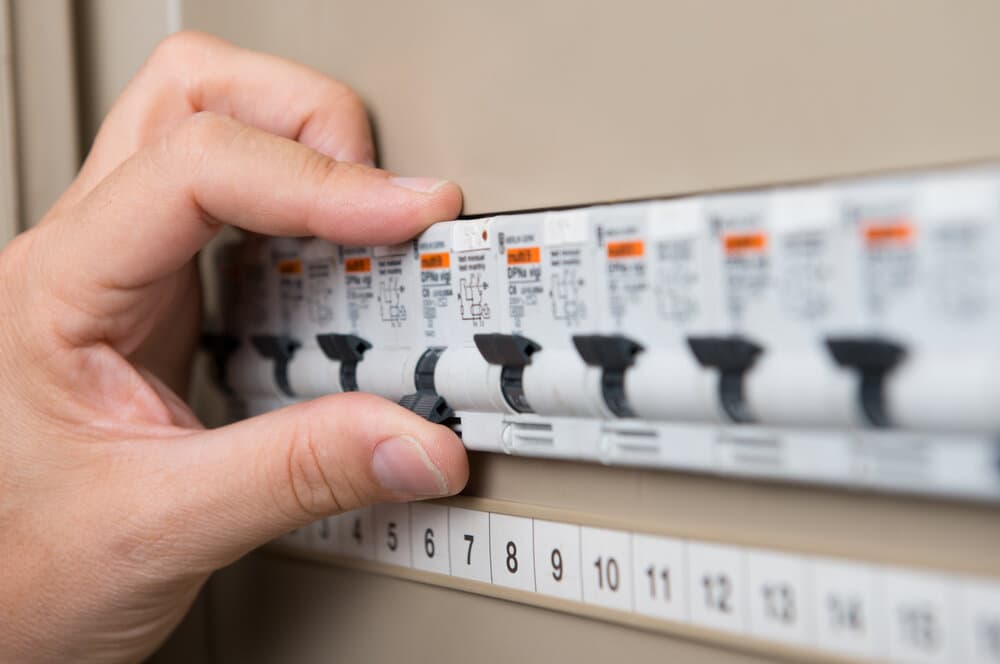
A safety switch that keeps tripping is not broken — it is doing exactly what it was designed to do. Safety switches (also called RCDs, or residual current devices) cut power when they detect even a tiny current leaking to earth, because that kind of fault is the one most likely to cause electric shock. Repeated tripping means the safety switch is detecting a real problem. The job is to find what is causing it, not to stop the switch from tripping.
This guide explains how safety switches work, the most common reasons they trip repeatedly, what is safe to check at home, and when to call an electrician.
How a safety switch works
A safety switch continuously compares the current flowing out on the active wire with the current returning on the neutral wire. In a healthy circuit, those two numbers are almost identical. If even a small difference develops — as little as 30 milliamps — the safety switch trips instantly, cutting power within about 30 milliseconds.
That margin is deliberately tight because the current that leaks through a human body during an electric shock is in exactly that range. A safety switch is the difference between a dangerous fault becoming a nuisance trip and a dangerous fault becoming a serious injury.
So when a safety switch keeps tripping, there are really only two possibilities: either there is a genuine earth leakage somewhere in the system, or the safety switch itself has failed. Both need investigation.
The most common causes
In order from most to least common:
1. A faulty appliance
The single most common cause of safety switch tripping is a failing appliance. Old kettles, worn iron cords, washing machines with deteriorating insulation, and outdoor equipment that has been rained on are all frequent culprits. An appliance that works "most of the time" but trips the RCD under load or when moved is almost always the one at fault.
2. Moisture in an outdoor fitting or circuit
Water is the enemy of electrical systems. An outdoor powerpoint that has weathered over time, a light fitting that has cracked and let in rain, a garden light with a broken seal, or a hot water system that has developed a leak can all cause earth leakage that trips the safety switch. Tripping that happens after rain is a strong signal that moisture is involved.
3. A failing hot water system or element
Hot water systems are a common cause because they have a heating element sitting in water, and when the element starts to break down, it leaks current to earth. A safety switch that trips every time the hot water cycles on is almost certainly pointing at the hot water system.
4. Damaged wiring inside a wall or ceiling
Wiring that has been nicked by a picture hook, chewed by a rodent in a roof space, or damaged during renovation work can develop intermittent earth faults that show up as random tripping. These faults are the hardest to find because they do not always trip on command.
5. A failing safety switch
RCDs do wear out, particularly older ones. A safety switch that has been in service for 15+ years and starts tripping randomly may just be at the end of its life.
Step 1: Unplug everything on the affected circuit
Before doing anything at the switchboard, unplug every appliance on the circuit that keeps tripping. This eliminates the most common cause immediately.
Step 2: Try to reset the safety switch
With everything unplugged, reset the safety switch. If it holds, the problem is almost certainly one of the appliances. Plug them back in one at a time, waiting a minute between each, and watch for the moment the trip returns. The last appliance plugged in before the trip is the likely culprit.
If the safety switch trips again instantly with nothing plugged in, there is a fault in the wiring or in a hard-wired fitting (like a light, hot water system, or oven). That needs an electrician.
Step 3: Note the pattern
A few questions help an electrician diagnose the issue faster:
- Does the tripping happen only after rain? Moisture ingress is likely.
- Does the tripping happen when a specific appliance runs? That appliance is the probable cause.
- Does the tripping happen at a specific time of day? A timer, a hot water cycle, or scheduled equipment may be involved.
- Is the trip immediate or delayed? Immediate trips point to hard shorts or damaged wiring. Delayed trips often point to load-related faults.
- How old is the safety switch itself? Units older than 15 years are suspects in their own right.
What not to do
Do not bypass the safety switch. Every so often somebody tries to run the circuit through a non-RCD bypass "just until it is fixed". That defeats the entire safety function and is extremely dangerous.
Do not keep resetting a switch that trips immediately. Each reset re-energises the fault.
Do not assume it will fix itself. Intermittent RCD tripping is a warning sign, not a nuisance, and the underlying fault rarely goes away on its own.
Do not try to test or open the switchboard. Leave that to a licensed electrician.
When it is urgent
Treat the situation as urgent if any of the following apply:
- The safety switch trips immediately and will not reset even with everything unplugged.
- There is a burning smell at the switchboard, a powerpoint, or a fitting.
- A circuit has completely lost power and repeated resets fail.
- The trip coincides with visible damage, heat, or an unusual noise.
- A safety switch is tripping alongside a circuit breaker on the same circuit.
In those cases, stop troubleshooting and call an electrician rather than continuing to test.
What an electrician will do
A licensed electrician can diagnose the cause using insulation resistance testing, earth leakage testing, and circuit isolation. The process usually involves:
- Testing the safety switch itself to confirm it is operating correctly.
- Isolating each branch of the circuit to find which section is leaking.
- Testing hard-wired devices (hot water systems, ovens, lights) that might be contributing.
- Checking outdoor fittings and anywhere moisture can get in.
- Replacing the faulty component or repairing the damaged wiring.
Most safety switch faults can be diagnosed and fixed in a single visit. For stubborn intermittent faults, the electrician may need to return during specific conditions — for example, after rain if the issue is weather-related.
What to do next
If a safety switch keeps tripping despite unplugging appliances on the circuit, the next step is a visit from a licensed electrician. Contact AB Electrical with the suburb, a description of the pattern (when it trips, what circuit, how often), and any obvious triggers. For urgent situations — burning smell, visible damage, or persistent tripping with nothing plugged in — call directly.
The switchboards service page covers RCD installation, replacement, and repair work in more detail.
Related Articles
Why Circuit Breakers Keep Tripping
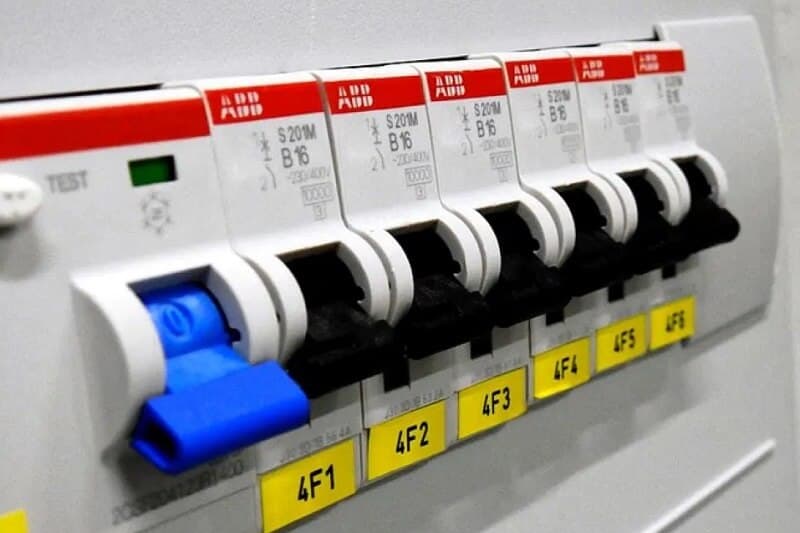
Repeated tripping is usually a sign of a real fault or overload. This guide explains the common causes and when to stop resetting the breaker.
Burning Smell from a Powerpoint? Treat It as Urgent
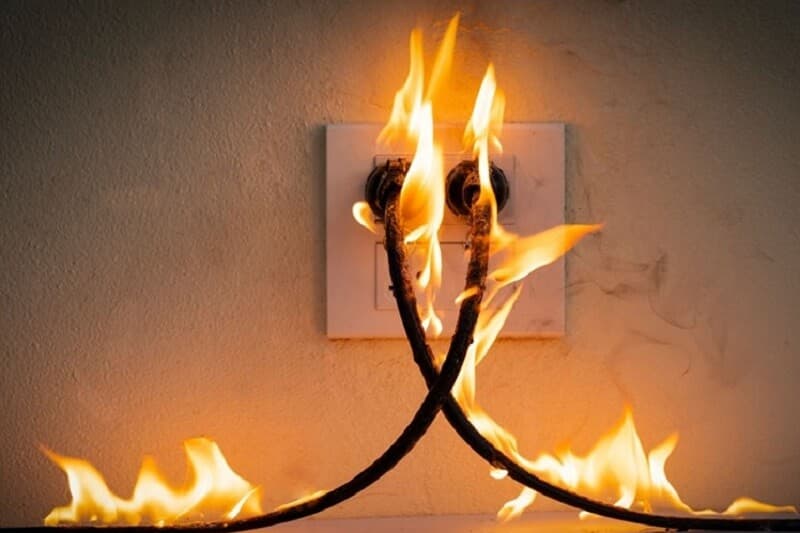
A burning smell near an outlet is not something to ignore. Here is what it can mean, what not to do, and when to call for urgent help.
Why Lights Flicker and When It Matters
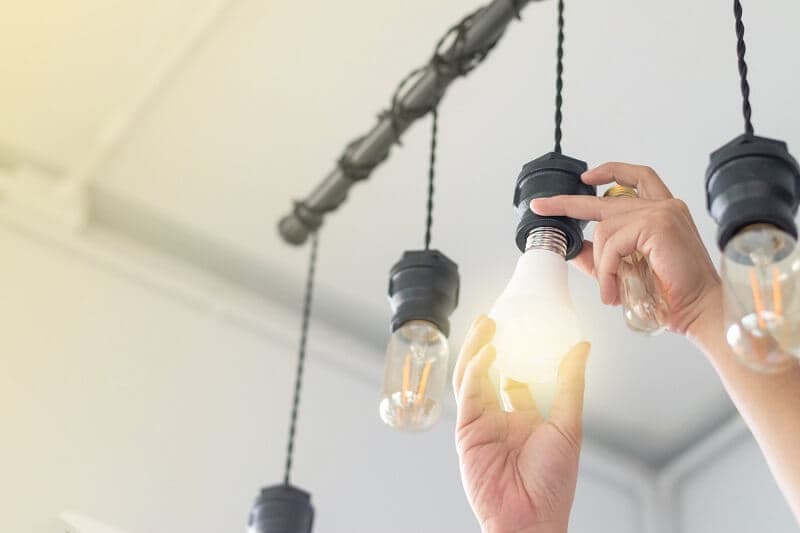
Flickering lights can be minor or a sign of a deeper electrical problem. Learn what to look for and when to organise an electrician.