Emergency lighting and exit signs are the kind of compliance item that quietly accumulates in the "I'll deal with it later" pile until something forces the issue — a council inspection, a fire safety audit, an insurance renewal, or worst of all, an actual emergency. For Central Coast building owners, strata committees, and commercial tenants, knowing what's required and what isn't is the difference between a calm half-day visit and a panicked scramble. This guide walks through what NSW requires, who is responsible, how often testing has to happen, and what counts as compliant.
If you need a Central Coast commercial electrician to test, certify, or upgrade emergency lighting and exit signs on your building, AB Electrical handles this work as part of regular commercial maintenance with full compliance reporting.
What "emergency lighting" actually covers
Emergency lighting in NSW commercial buildings has three main components:
- Emergency luminaires — battery-backed light fittings that automatically illuminate when mains power fails, providing enough light for occupants to find their way out of the building safely
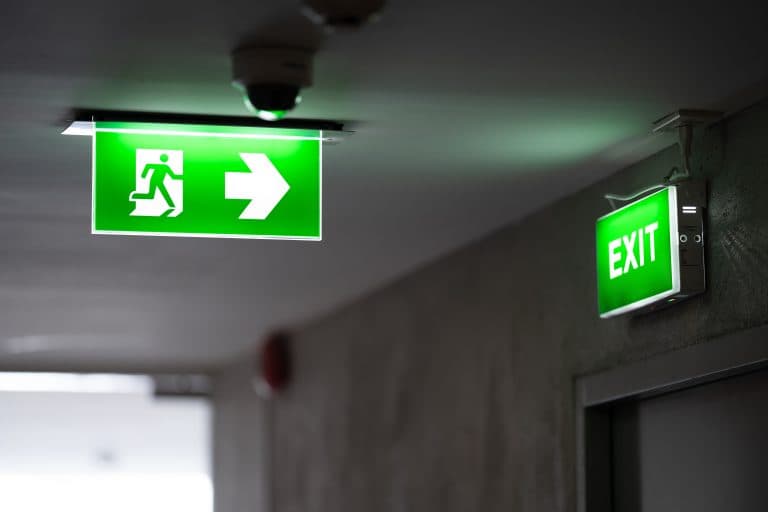
- Exit signs — illuminated signs (usually green and white) marking the exit path and exit doors, also battery-backed so they remain visible during a power failure
- Direction indicators — arrows or signage showing the direction of the nearest exit, in larger or more complex buildings
All three are designed to do one thing: keep occupants safe and able to evacuate during a power failure or emergency. They are not optional. They are not "nice to have." They are a legislated component of fire safety in most NSW commercial buildings.
Where emergency lighting is required
Emergency lighting is required by the National Construction Code (NCC), the Building Code of Australia, and AS/NZS 2293 in:
- Class 5 buildings — offices
- Class 6 buildings — shops, retail premises, and cafes
- Class 7 buildings — car parks, warehouses
- Class 8 buildings — factories, workshops, small industrial
- Class 9 buildings — public buildings, schools, healthcare, places of assembly
- Common areas of strata commercial buildings
- Stairwells, corridors, and exit paths in any building over a certain occupancy
- Mixed-use buildings with commercial tenancies on the ground floor and residential above
A small Central Coast retail shop, a strata commercial unit, or a hospitality cafe is almost certainly required to have emergency lighting and exit signs in place. The exact specification depends on the building class, the exit path layout, and the local council's fire safety requirements.
What AS/NZS 2293 actually requires
The technical standard for emergency lighting in Australia is AS/NZS 2293, which has three parts:
- AS/NZS 2293.1 — system design, installation, and operation
- AS/NZS 2293.2 — inspection and maintenance
- AS/NZS 2293.3 — emergency luminaires and exit signs (the actual fittings)
The headline requirements:
- Every emergency luminaire and exit sign must operate for at least 90 minutes on battery backup after mains power fails
- Inspection and testing is required every six months under part 2 of the standard
- Records must be kept for the building owner's compliance trail
- A certificate of inspection is issued after each test, showing which fittings passed, which failed, and what action was taken
- Failed fittings must be repaired or replaced to maintain compliance — a building with even one failed exit sign is technically non-compliant
The 90-minute requirement is the one that catches most older buildings out — the original batteries fail or degrade, and a fitting that used to provide 90 minutes of backup might only last 20 minutes after 8 years.
Who is responsible
Responsibility for emergency lighting compliance varies by building type and lease structure:
- Building owner — responsible for the overall building compliance and the common areas
- Strata committee / owners corporation — responsible for common areas in strata commercial buildings
- Commercial tenant — usually responsible for emergency lighting within the tenanted area, depending on the lease terms
- Property manager — responsible for managing the testing schedule and records on behalf of the owner
In practice, many leases push the testing obligation onto the tenant, and many property managers outsource the testing to a commercial electrician who handles it as part of regular maintenance. The single most important thing is to confirm in writing who is responsible — because gaps in responsibility are gaps in compliance.
What a six-monthly inspection covers
A standard six-monthly emergency lighting inspection on the Central Coast covers:
- Visual inspection of every emergency luminaire and exit sign — looking for damage, missing covers, dirt obscuring the lens, broken brackets
- Function test — disconnecting mains supply (usually circuit by circuit) to verify each fitting illuminates correctly when power is removed
- Duration test (annual, not six-monthly) — running each fitting on battery only for the full 90 minutes to verify the battery is still providing the required backup time
- Battery condition check — measuring the battery voltage and condition, replacing batteries that are at or near end of life
- Lamp / LED check — replacing any lamps that have failed or are dimming
- Compliance certificate — issued at the end of the visit, listing every fitting tested, the result, any failures, and any work done
- Failure list — fittings that need repair or replacement, with a quote for the work
The six-monthly visits are visual + function. The annual visit adds the full duration test. Both produce a compliance certificate that the building owner can supply to the council, the insurer, or the fire safety auditor.
Common failures and what they mean
The most common failures found during emergency lighting testing on Central Coast commercial buildings:
- Battery has degraded — fitting illuminates but doesn't last 90 minutes. Battery replacement, $40-$120 per fitting depending on type.
- Lamp has failed — fitting doesn't illuminate at all. Lamp/LED replacement, $20-$80 per fitting.
- Charging circuit failure — fitting works while mains is on but battery is never charging. Driver or charger replacement, $80-$220 per fitting.
- Physical damage — fitting cracked, missing cover, mounted incorrectly. Replacement, $120-$400 per fitting.
- Exit sign LED panel failure — common on older fluorescent-style exit signs that have been retrofitted. LED panel replacement or full upgrade.
- Missing fittings — older buildings sometimes have areas that should have emergency lighting but never did. New install required.
A typical first visit on an older building finds 5-15% of fittings failing in some way. Subsequent visits find 1-3% as failures get cleared and replacements catch up.
What it costs on the Central Coast
Realistic Central Coast pricing for emergency lighting compliance work in 2026:
- Six-monthly inspection (small office, 5-15 fittings): $280–$450 per visit
- Six-monthly inspection (larger commercial, 20-50 fittings): $450–$850 per visit
- Annual full duration test add-on: $80–$180 on top of the six-monthly visit
- Per-fitting replacement (typical): $180–$420 supplied and installed
- Initial compliance audit on a new client building: $400–$900 depending on size, includes register build and full first inspection
- Full system upgrade for an older building: priced separately, depends on scope and number of fittings
What to do if you've never tested
If you have a Central Coast commercial building, strata commercial unit, or retail tenancy and you've never actually had the emergency lighting tested — or you don't know when it was last done — the right next step is a one-off compliance audit. The auditor will:
- Walk the building and identify every emergency luminaire and exit sign
- Test each one and record the result
- Build the register that the ongoing six-monthly visits will use
- Issue a compliance certificate with the current state and a list of any failures or upgrades needed
- Recommend a recurring schedule (six-monthly is the standard)
After the initial audit, the recurring visits are quick and cheap because the register is in place. The hard part is just getting started.
How AB Electrical handles emergency lighting compliance
AB Electrical sets up emergency lighting compliance programs for Central Coast commercial customers as part of regular ongoing maintenance. The pattern:
- Initial walkthrough or audit to identify all fittings and test the current state
- Compliance certificate issued at completion of the first visit
- Recurring six-monthly visits scheduled and reminded automatically
- Failure list with each visit, plus quotes for any repair or replacement work
- Annual duration test included in the schedule
- Account terms available for ongoing commercial customers
- One licensed electrician on the work — Abbass or a member of the AB Electrical team
The whole program is designed so the building owner or manager can hand the certificate to the council, the insurer, or the fire safety auditor without scrambling to find records.
What to do next
If your Central Coast commercial building, strata unit, or retail tenancy needs emergency lighting and exit-sign compliance set up — for the first time or because the previous program has lapsed — contact AB Electrical with the site address, the type of premises, and an approximate count of fittings if you can. We will reply with a written proposal for the initial audit and the recurring schedule.
For more on commercial electrical work, see the Central Coast commercial electrician page.
Related Articles
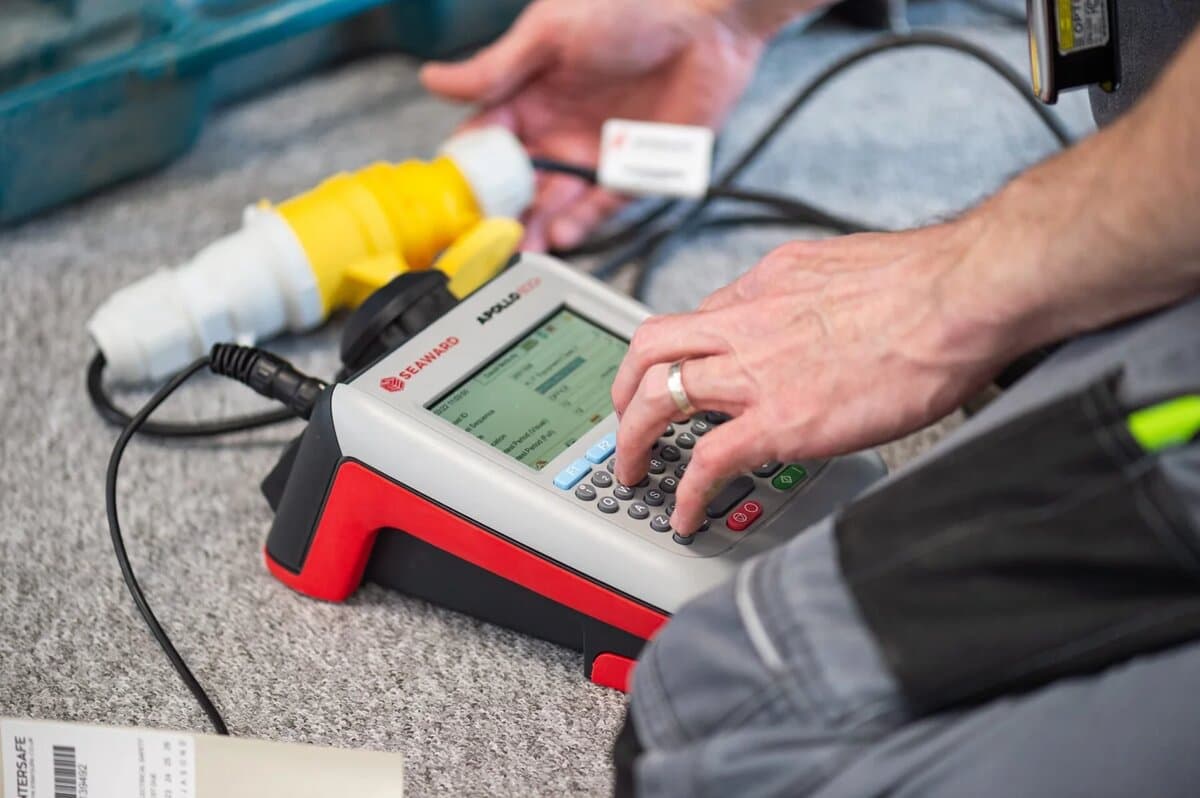
Test and Tag for Central Coast Businesses — What Is Required and How Often
A practical guide to test-and-tag compliance for Central Coast businesses — what AS/NZS 3760 requires, how often each type of premises needs testing, what a typical visit covers, and how to set up a recurring program with clear records.
How to Choose a Commercial Electrician for a Cafe, Retail, or Office Fit-Out
A practical guide for Central Coast business owners and project managers planning a fit-out — what to ask a commercial electrician before hiring, what to look for in a fit-out quote, what compliance certificates should be supplied, and the red flags that lead to mid-build problems.
When a Switchboard Upgrade Is Worth Doing
Understand the signs that a switchboard may be outdated, overloaded, or no longer suited to the way the property is used.